Bolivian Consumers Declare Opposition to GMOs
Declaration of the Consumers’ Collective of Bolivia in the lead up to next week’s Agricultural Summit.
We are a collective of diverse activists, organizations, youth, women, and civil society movements [1.VSF, Revolución de la Cuchara, Casa de los Ningunos Slow Food Bolivia, AOPEB, Pacto Mundial Consciente, Red Verde, Asociación Comuna, and others.] who have come together with the common goal of building a “network for responsible consumption” that supports small and medium producers and promotes healthy and ecologically produced food. With this statement, we outline our position regarding the reopening of the debate on GMO crops set to occur at the Agricultural Summit (Cumbre Agropecuaria) March 26-27, 2015 in the city of Santa Cruz, Bolivia.
Considering…
In Bolivia, a number of laws are in place, which ban the production, importation, distribution, and marketing of GMOs, including:
- Article 255 of the Constitution (CPE), which prohibits all forms of production, import and marketing of GMOs.
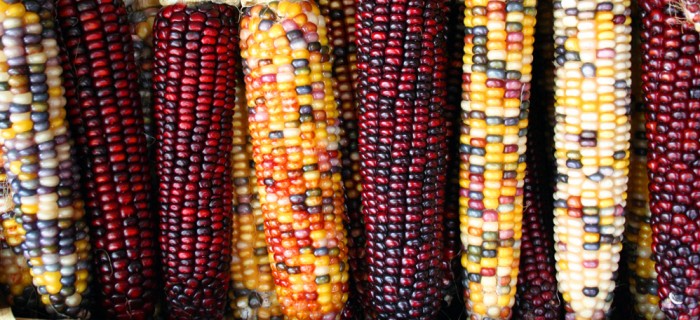
- Administrative Resolution No. 135/05 VRNMA, which protects maize from any possibility of transgenic contamination.
- Executive Decree No. 181 (Article 80), which prohibits the purchasing of GMO foods in government procurement and school feeding programs.
- The Law of the Rights of Mother Earth (Law No. 071), which establishes “the right to the conservation and protection of the diversity that makes up Mother Earth, without being genetically altered or modified in its structure in an artificial way…”
- Law No. 144, the Law of Communal Productive Agricultural Revolution (Ley de Revolución Productiva Comunitaria Agropecuaria) that protects species for which Bolivia is a center of origin or center of diversity—including maize, cotton, and many other crops—from any possibility of transgenic contamination.
- Article 24 of the Law of Mother Earth and Integrated Development for “Living Well” (Ley Marco de la Madre Tierra y Desarrollo Integral, Law No. 300) outlines the state’s obligation to take action toward the gradual elimination of GMO crops from the country.
- The School Food Law in the Context of Food Sovereignty (Ley de Alimentación Escolar en el Marco de la Soberanía Alimentaria), which “prohibits the state from making contracts for the procurement of GMO food for school feeding programs.”
Despite these laws, the cultivation of GMOs is on the rise, and the government has shown an openness to requests from agribusiness to continue increasing production. Thus, we express our concern regarding how institutions like the Agricultural Chamber of Eastern Bolivia (CAO) and the Association of Wheat and Oilseed Producers (ANAPO), among others, have repeatedly requested that government agencies deregulate the use of GMO soy, maize, and cotton seeds.
While soy is the only legally authorized GMO crop in the country, government agencies have reported the presence of other GMO species in Bolivian territory (e.g. GMO cotton found in the municipality of Pailón by the Director General of Biodiversity and Protected Areas; various samples of GMO maize found in the Chaco region in 2010). There is no evidence to indicate that any action has been taken regarding these discoveries.
It is well known that GMO crops do little to solve hunger, but rather increase the power of elites and the advance of land grabbing and foreign land ownership.
In addition, there has been a violation of the decree allowing for the production of GMO (Roundup Ready) soy, which requires the segregation of GMO crops, environmental monitoring, and the restriction of product destination (for export only). This breach has allowed GMO soy to steadily expand.
Stay in the loop with Food First!
Get our independent analysis, research, and other publications you care about to your inbox for free!
Sign up today!It is well known that GMO crops do little to solve hunger, but rather increase the power of elites and the advance of land grabbing and foreign land ownership. These processes are responsible for the loss of agro-biodiversity and dietary diversity; genetic contamination; food insecurity; and environmental, political, and territorial conflicts.
As women and mothers, we are alarmed to see the presence of presence of GMO soy in government-subsidized foods, such as the food subsidy for breastfeeding women and in school breakfast programs.
A number of scientific studies point to the risks of GMO products—and their possible link to cancers, allergies, pesticide poisoning, and other health problems—which are continually silenced by the transnational corporations that promote them.
We declare the following:
We ask the authorities to include consumers in any and all debates related to food. Therefore, we demand to be invited to participate in next week’s Agricultural Summit.
We declare our total opposition to the cultivation of GMO crops, including soy. We also ask that the law requiring the reversal of GMO soy cultivation be enforced (Law 300).
We demand that the genetic material of food, agriculture, and Mother earth be protected from all risks of genetic contamination and conserved for present and future generations.
We demand that the debate on GMO crops be opened up to a national referendum, so that Bolivia’s more than 10 million citizens can decide on the kind of development we want for the future of our food system.
We demand that the debate on GMO crops be opened up to a national referendum, so that Bolivia’s more than 10 million citizens can decide on the kind of development we want for the future of our food system.
We ask that the precautionary principle be enforced, as it is in Europe, in recognition of the scientific evidence demonstrating the potential health risks of GMOs.
We express our full support to peasant and small farmer organizations and to communitarian, ecological production, because that is the agriculture that really feeds us.
We ask for the implementation of comprehensive policies in support of the peasant and family farming economy and community-based, ecological production with the goal of achieving national Food Sovereignty.
Finally, we assert ourselves as an active network dedicated to monitoring the right to healthy food, food sovereignty, and GMOs in Bolivia.
“For a Bolivia free of GMOs!”
--> // // Removidas / comentadas de forma segura. Se precisarem no futuro, reimplementar sem misturar HTML comment com PHP. ?>
 Help Food First to continue growing an informed, transformative, and flourishing food movement.