Bolivian Quinoa: To Eat or to Export?
Earlier this year, Mother Jones published a piece entitled “5 Ways to Sip a Cocktail and Save the World.” First on the list of superhero drinks was “a Caïpirowska that creates jobs” made with fair-trade quinoa vodka. As it moves out of niche health food stores and into Zagat-rated restaurants, many are touting quinoa’s popularity as a way to save Bolivian peasant farmers from the depths of poverty.
This kind of thinking is a popular solution to poverty—encourage export-oriented agriculture so that developing countries can join the international market, grow their economies and thus improve lives.
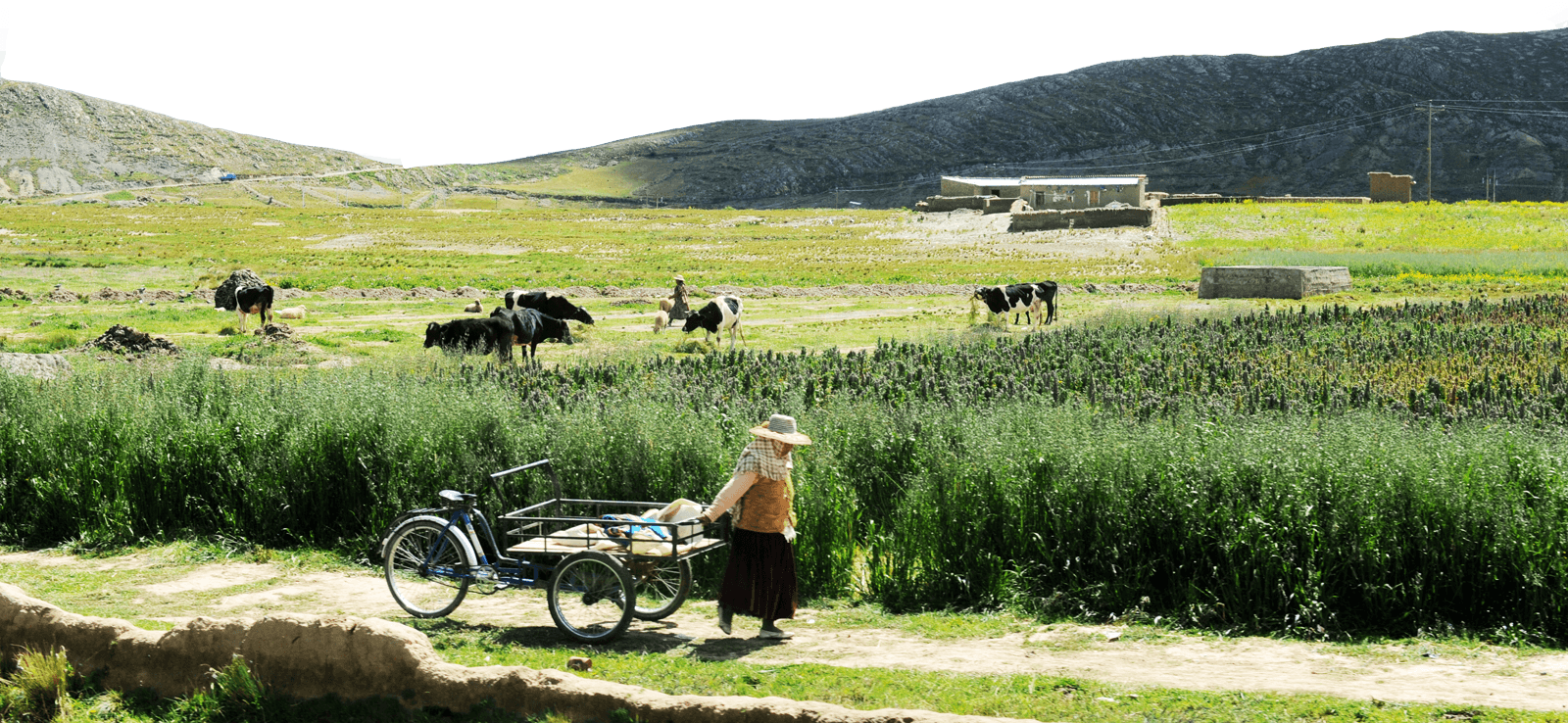
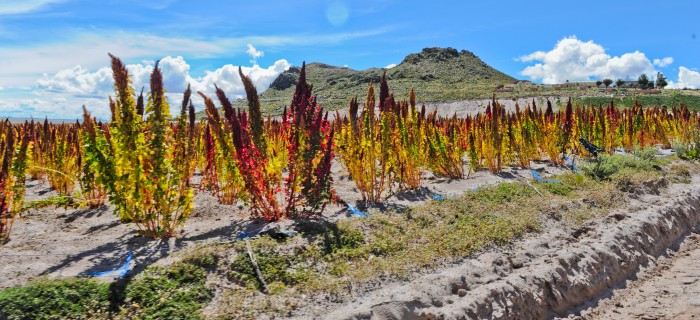
In terms of promoting Bolivia’s global trade, quinoa has been a raging success. A rush of development projects supporting quinoa production for export has allowed Bolivian peasant farmers to begin exporting abroad.[i] And in foreign markets Bolivia’s new export commodity is suddenly cooler than sliced bread: quinoa vodka, quinoa salad, quinoa pancakes, quinoa everything… are all the rage abroad. As international market demand goes up, so do prices, so more farmers want to get in on the game and plant more acres of quinoa. Suddenly farmers are moving away from quinoa production for personal consumption and local markets and towards cash-crop export production.[ii] With the high price of quinoa abroad, growing lower-priced onions and potatoes for the local Bolivian market no longer seems worth it.[iii]
As a result of years of social movement organizing, Bolivia is now one of a handful of countries that actually mandates food sovereignty in its constitution.
That’s the trajectory of quinoa producers in Bolivia. So what’s the problem? Incomes go up, Americans get to enjoy their high protein superfood, and everybody wins. Except that as prices rise internationally, they also rise nationally. Bolivians can’t afford to buy their own quinoa, and imported rice and noodles are being sold at a fifth of the price.[iv] Quinoa is culturally important and significantly healthier—especially in the diet of an altiplano family. Even with increasing incomes, malnutrition is on the rise in quinoa growing areas. Many farmers who once grew quinoa for home consumption and barter now only grow quinoa for export. They have become wholly dependent on a volatile international market for their income as well as for their food.[v]
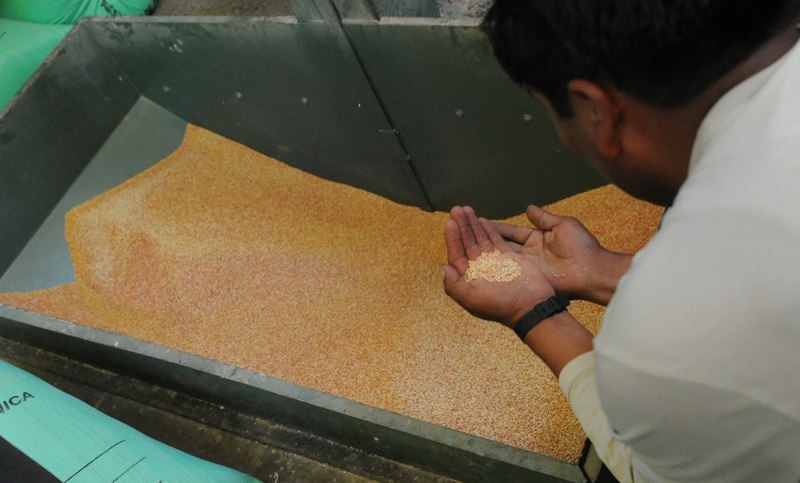 In the meantime, international demand is high, and quinoa producers are investing in mechanized farming techniques such as the rotary plough in order to keep up. This intensive tilling method destroys the already fragile altiplano soil structure, allowing top soil and moisture to be lost to the high-altitude winds. Soils then produce lower yields, which creates more demand for petroleum-based fertilizers and other high-cost, non-local inputs. Llamas, important for meat, weaving and their cultural significance, were usually co-cultivated with quinoa in order to use their manure to maintain soil fertility. Now llama grazing land is being used to produce more quinoa, further increasing the demand for fertility inputs.
Just in the past five years, quinoa-producing land has expanded by 23% as the “quinoa frontier” marches northward.[vi] Further, the market is demanding large-grain, white quinoa, characteristics available with the Quinoa Real variety. Of the 2950 quinoa varieties currently being stored at the High Andean National Grain Bank, 96% farmers are growing between only 1 and 4 them.[vii] This kind of limited genetic diversity, especially grown in monoculture fields, allows plants to become more susceptible to pests, diseases and climatic shifts, less able to evolve resistance over time, and thus a riskier proposition for a grower depending on a single genetic variety crop for a year’s income.[viii] As quinoa production expands, quinoa farmers destroy the very resources they depend on to grow quinoa.
 The story is not all negative, however. Bolivian law attempts to control farmer expansion, cooperatives and collectives exist to support sustainable growing methods such as crop rotation and the use of organic compost, organic quinoa is a popular and more lucrative good in international markets which encourages organic growing methods.[ix] Higher incomes for farming mean residents may be able to put off migrating to cities or other countries to find work.[x] But the facts of participating in the global food market are still in place. Quinoa farmers respond to international market demands instead of local needs. They eat American wheat while Americans eat Bolivian quinoa, importing a high-cost food culture that is not their own. This is tentative food security based on a neoliberal cash crop economy; it is not food sovereignty.
Stay in the loop with Food First!
Get our independent analysis, research, and other publications you care about to your inbox for free!
Sign up today!There is hope, however. As a result of years of social movement organizing, Bolivia is now one of a handful of countries that actually mandates food sovereignty in its constitution. But it has a long way to go towards implementing the trade regulations, supply management, agroecological supports and other policies needed to make food sovereignty a reality. An important first step would be to encourage production for domestic consumption first. Quinoa’s growing popularity abroad is not inherently problematic, as long as global market demands do not trump the Bolivian people’s ability to own and control its food system at home.
Join Food First in Bolivia to explore Quinoa and Andean Food Sovereignty. Find out more here.
Works Referenced:
1. Banks, E. (2011, May 17). Bolivian Quinoa Questions: Production and Food Security. Andean Information Network.
2. Romero, S. (2011, March 19). Quinoa’s Global Success Creates Quandry at Home. The New York Times.
4. Sherwin, A. (2011, March 22). The food fad that’s starving Bolivia. The Independent:
5. Wilfredo Rojas, J. L. (2004). Study on the Social, Environmental and Economic Impacts of Quinoa Promotion in Bolivia. La Paz: Foundation, PROINPA.
6. Sherwin 2011
7. Rojas 2004
8. Ibid
9. Ibid
10. Banks 2011
11. Romero 2011
--> // // Removidas / comentadas de forma segura. Se precisarem no futuro, reimplementar sem misturar HTML comment com PHP. ?> Help Food First to continue growing an informed, transformative, and flourishing food movement.