Doce días en el campo Cubano – 12 days in the Cuban countryside
As we landed in the Soviet era passenger jet at José Martí airport, in late May, 2011, I realized that I would be satisfying two long-standing dreams regarding Cuba and it’s 1959 revolution. First, to experience on the ground present day Cuban culture and its people, and second, to evaluate the relative success of the socialist experiment that had been taking place for the past half century 90 miles off the coast of Florida. I was with a delegation of 17 persons from the United States and Canada on a tour to study Cuban agriculture today.
The delegation was inspired by the work of Food First’s Food Sovereignty Tours and Global Exchange, two organizations closely aligned to study and promote a more fair agro-food system. We 17 were a diverse lot in background, age and temperament, and included retired college professors, nutritionists, public health officials, a farmer and one brave undergraduate working on her senior thesis. Translator, driver and Food First representative added wisdom and continuity to our group.
In 1989 the Cuban people were faced with a food crisis. After centuries of an agriculture based on colonial sugarcane and tobacco monoculture and the importation of everyday food, the ’59 revolution did little to alleviate food dependence, and the 1961 trade blockade imposed by the United States forced Cuba to accept help from the Soviet Union to prop up the Cuban agricultural economy. However, the fall of the Soviet Union in 1989 meant no more support from Russia, either as a customer for crops such as sugar, or imports such as pesticides and chemical fertilizers. This, plus a tightening of the United States blockade, led to serious food shortages affecting the Cuban daily diet.
The Cubans have taken an agriculturally dependent economy producing next to nothing for local use to feeding themselves at a level of 85%.
Though government studies of sustainability had taken place for many years before, efforts to feed the country without imports did not occur in earnest until the 1989 crisis. Over the next few years, three major programs were set in place. First, land ownership policies were drastically changed, second, small-scale organic farming methods were developed, and third, urban agriculture, involving all city dwellers, was encouraged. We had the opportunity to observe all three programs in action.
 On the first day of our journey we boarded our new VW 20 passenger tour bus and set off into the Cuban countryside. Over the following two weeks, we met with campesinos, farm owners and party officials, and even pulled weeds ourselves on a couple of occasions. To create small individual farms, large collective farms were broken up into smaller units, and given to individual farmers or cooperatives, who then contract with the government to grow fruits and vegetables and raise livestock. A portion of the yield goes to the government. The farmer may then sell any surplus at private markets. Each farmer has the option to join Credit and Service Cooperatives, whose function is to serve member farmers with tools, seed, and advice. Farms cannot be sold but can be passed on to family members. This new system of individual farms now includes 150,000 hectares (one hectare equals about 3.5 acres.)
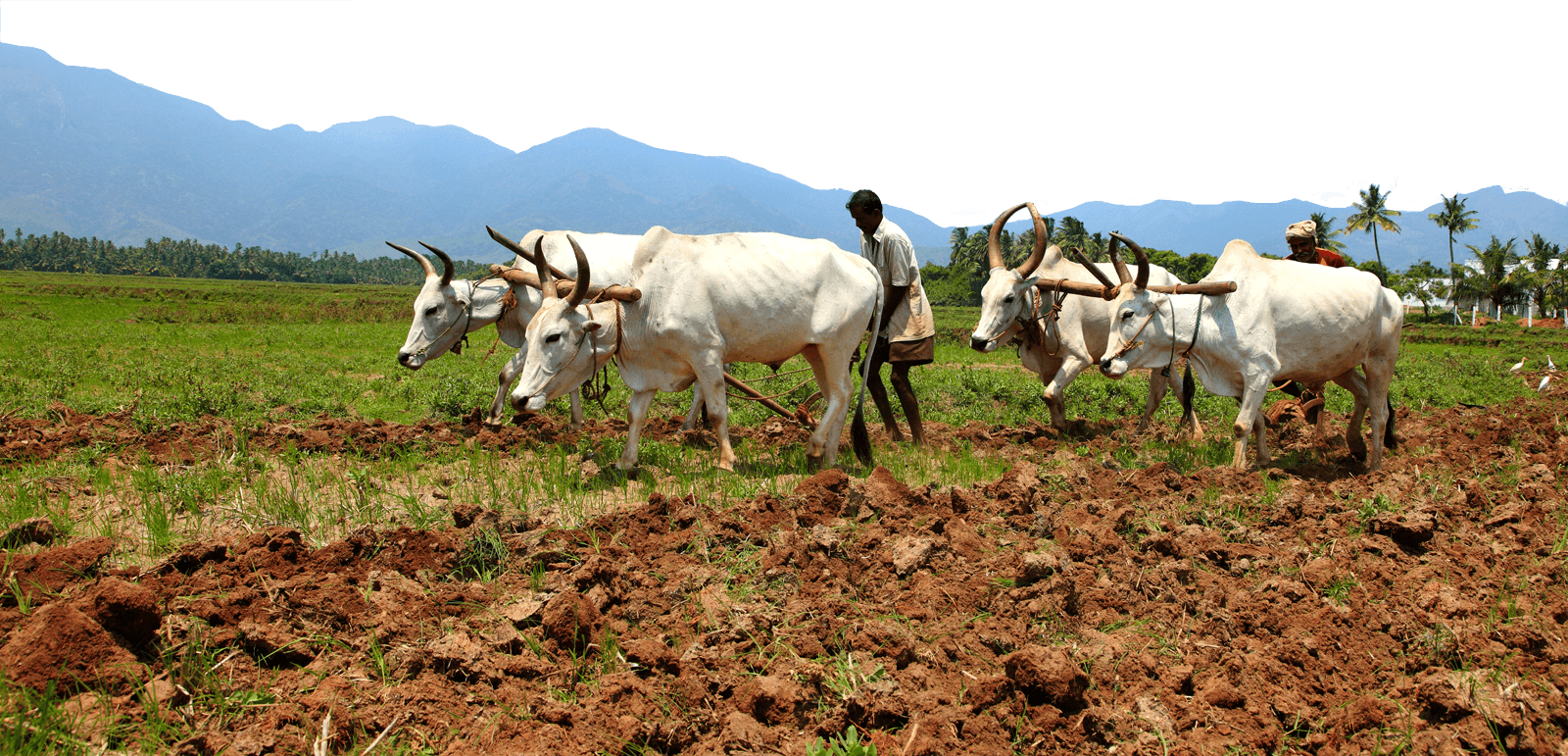
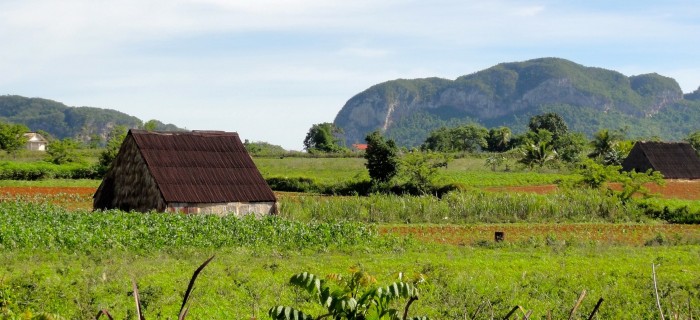
We visited a number of small farms that were created post-1989: a hog farm, a tobacco farm, a fruit farm with 42 beehives and a pineapple farm with a pair of oxen. Oxen are a preferred method of tillage, though we did observe an occasional tractor. All of the above farms operate with a minimum use of pesticides and with locally enhanced soils, all organically produced. This includes composted organic materials, manure, and vermiculture (earthworms). We observed ingenious methods of insect control, examples of which include the use of decoy plantings and insect traps.
I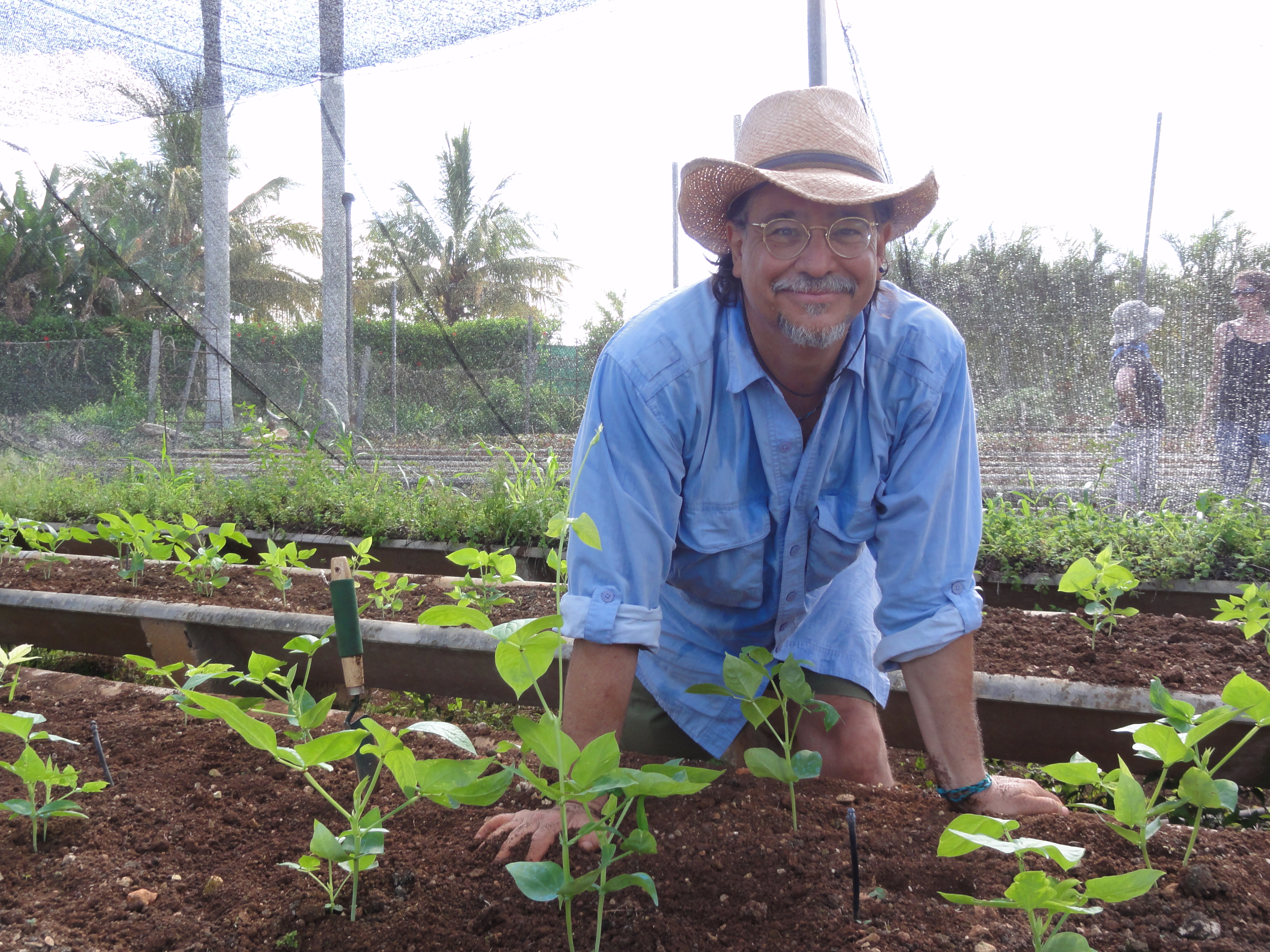 n Cuba’s cities, urban farming is a hugely popular and successful operation involving 400,000 gardeners. The largest and most scientific enterprise we visited was a 23 acre layout within the Havana city limits with mesh covered planting beds, expansive worm culture soil makers, and a stockyard with rabbits, bulls and goats for the production of manure. A workforce of 143 shareholders, enjoying established wages, hours and working conditions, runs this farm in the city. Farm policies are set by a popular vote. It even boasted it’s own science lab.
Stay in the loop with Food First!
Get our independent analysis, research, and other publications you care about to your inbox for free!
Sign up today!Less elaborate but equally important for total urban participation were backyard and balcony gardens. We met a proud and enthusiastic local entrepreneur, a señora who had organized her neighbors into an expansive network of backyard gardens all integrated into the existing trees and shrubs. After visiting five such gardens we all gathered on her back porch, drank fresh mango juice, and listened to the woman’s 81 year old mother relate her life story, contrasting her quality of life before and after the revolution.
Our stops throughout Cuba included a cigar factory, a health clinic, a milk bottling plant, an organic restaurant, and a 19th century coffee plantation. Throughout the visit we were welcomed cordially, drank refreshing fruit juices and were ushered into well-kept but simple homes. For relaxation we did jazz clubs, salsa bands, restaurants, Hemingway’s Cuban residence, and long walks through old Havana, including strolling along the waterfront boulevard, the Malecón.
The efforts of these Cuban agricultural revolutionaries means that Cuba now produces 85 per cent of its fruits and vegetables – healthy and nutritious and locally grown, district by district. Before the crisis of 1989 Cuban farmers produced only 20 percent for local needs. Given the evidence, the people of Cuba have achieved something quite special. The government planners to the professional farmers, the farm workers to the city gardeners, all have faced a challenge of feeding the country, and in a manner environmentally sustainable. The Cubans have taken an agriculturally dependent economy producing next to nothing for local use to feeding themselves at a level of 85%. Cuba and its people deserve strong recognition for their achievements: campesinos, working the oxen in the vegetable beds and cornfields, farmers and co-op managers offering assistance, backyard señoras in the cities, and the bureaucrats pulling the whole operation together. Viva Cuba y los Cubanos!
--> // // Removidas / comentadas de forma segura. Se precisarem no futuro, reimplementar sem misturar HTML comment com PHP. ?> Help Food First to continue growing an informed, transformative, and flourishing food movement.