Eating From the Milpa: Homemade Oaxacan Corn Tortillas with Black Beans
The state of Oaxaca in the south of Mexico extends upwards from tropical coastal plains to heavily wooded mountainsides and arid highlands. It fosters an incredible diversity of plants, animals and human cultures. All of these cultures, living as they do in hugely varied climates and ecosystems, have an important thing in common: corn or ‘maize.’
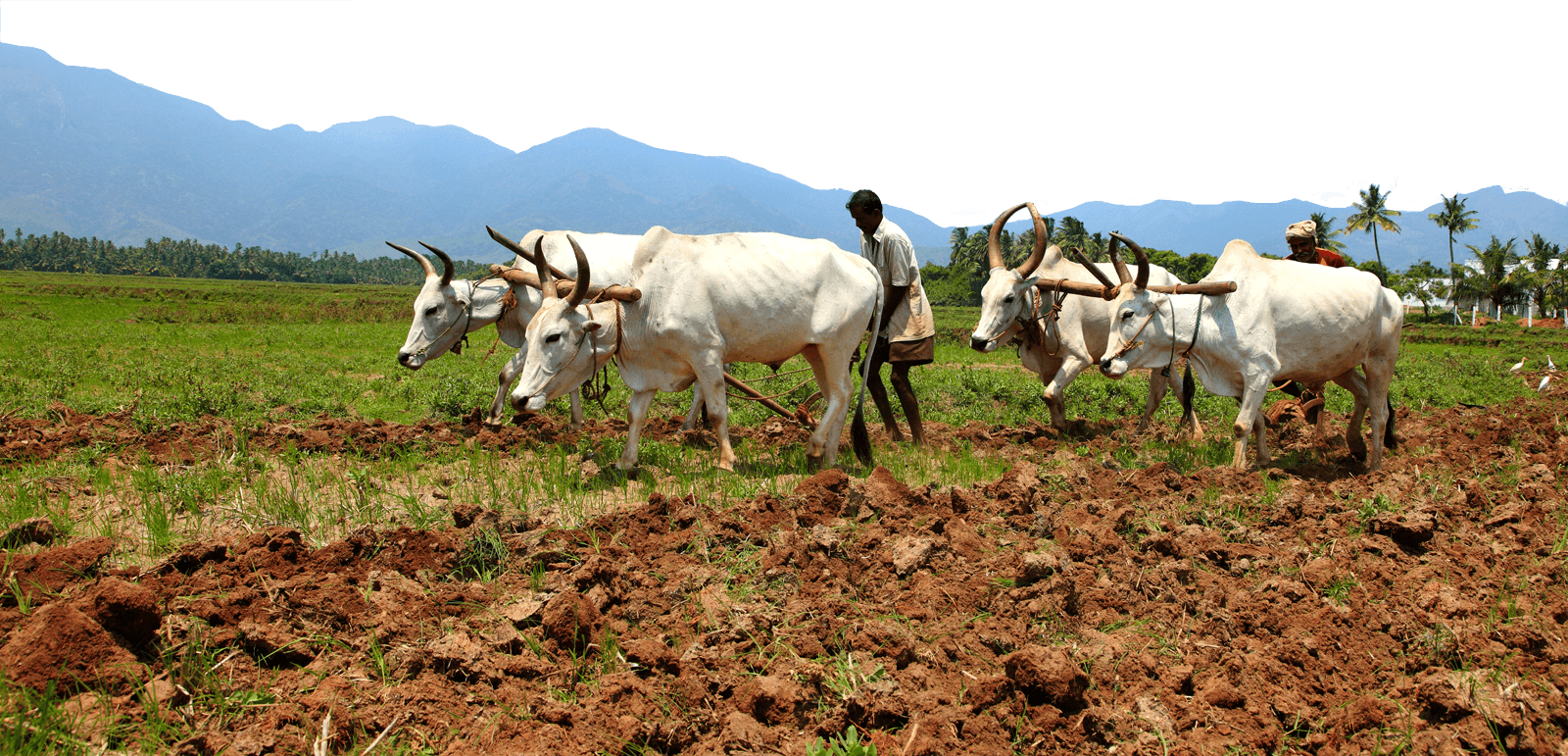
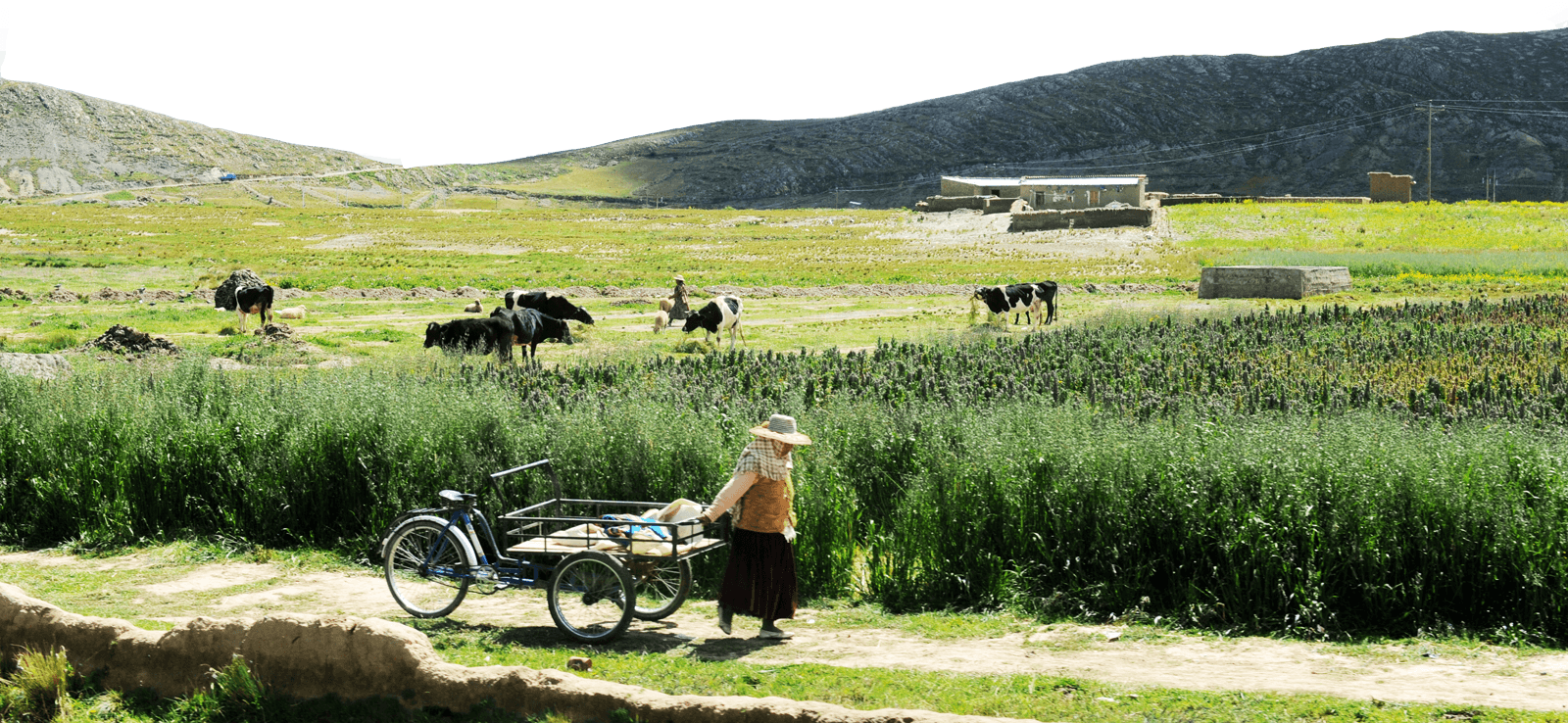
Corn, the backbone of the Mesoamerican diet and agriculture, is grown in the traditional ”milpa” system—small fields of squash, beans and corn. These crops are mutually beneficial to one another. The beans climb up the thick stems of the corn and fix nitrogen in the soil, while the squash provides ground cover that keeps the soil moist. But despite the significance of each crop to the other, corn remains the most important. Its significance is partly due to its immense adaptability. In the space of a few generations of careful selection, maize seed can be bestowed with the qualities that humans most desire.
 In Oaxaca alone there may be as many as 85,000 different varieties of the plant, all specialized to a set climatic conditions or human needs.
The biodiversity of corn and the traditional knowledge that exists in Oaxaca are valuable resources, and the question of how to protect and preserve them is becoming ever more pressing. While small farmers are facing the effects of climate change, the genetic diversity of the world’s main crops is in decline and centers of diversity are becoming increasingly important. They hold the knowledge and the raw materials that will allow rural communities—and indeed, all of us—to adapt, evolve and survive.
In 2001, researchers working in the village of Capulalpam in the Sierra Norte region of the state found that DNA from transgenic (GMO) maize had contaminated landrace varieties that were grown in the area. They also discovered how unpredictable transgenes can be when they cross into a new seed. After contamination, these genes assume random positions on the plants genome, creating alarming and hugely variable outcomes. Oaxacan maize, a precious genetic treasure, was, and is, under attack (Robin, 2010).
After the North American Free Trade Agreement (NAFTA) was adopted, Mexico was flooded with heavily subsidized, transgenic, midwestern corn, leaving small farmers unable to compete with the artificially low prices. Many were forced to seek work in the city or immigrate to the US and many parts of Oaxaca are clearly marked by their absence.
Despite all this, the many peoples of Oaxaca will not be conquered without a fight. This resistance is rooted in their role as custodians of biological resources and their knowledge of how to use them- the ability to feed ones own community being a foundation for self-determination.
Stay in the loop with Food First!
Get our independent analysis, research, and other publications you care about to your inbox for free!
Sign up today!
Handmade Corn Tortillas
Ingredients:
2 cups organic masa harina
1 ¼ cups hot water
some salt
dash of vegetable oil
Put the flour in a bowl and make a well in the middle. Add most of the water to the well and mix the flour slowly in. It will probably be dry and crumbly now, so add more water until you have slightly sticky dough that can still be rolled into a ball and kneaded. **
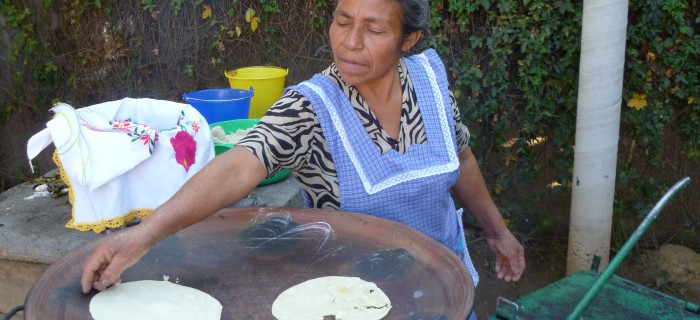
Let the dough rest for a while (30 min. or so) with a damp kitchen towel over it to stop it from drying out. Then take small balls of dough and flatten them into tortillas. This was more complicated than it sounds. We first tried with a rolling pin on a floured surface but this made them too floury and they often stuck to said surface. Then we tried putting the dough balls in plastic bags and squashing them/ rolling them/ vigorously flattening them with a fist. This gave better, though mixed, results that were greatly improved when the bag and dough were dusted with just a little bit of flour. Don’t try to make them too thin though, you will have to start over when they stick to everything!
Fry them in a dry frying pan on medium heat until they are lightly browned on both sides and air bubbles appear. Eat.
**We actually decided to add a little wheat flour at this point to increase the elasticity of the dough. Presumably that is because we used the wrong corn flour, but if you are having the same problem (dough looks like crumbs or porridge but never dough) this solution worked for us.
Refried Black Beans
Make before:
1 pound dried black beans
½ onion, chopped
1 tbsp lard
salt
a sprig of epazote, a green leafy herb (if you can get it, we couldn’t, it was fine)
In a big pan, fry the onions and epazote in the lard. When they are shiny and slightly translucent, add the beans and cover completely with water. Don’t add salt until the end, it will make the beans tough. Simmer for about two hours until everything is soft and the water is muddy-looking.
Frying the beans:
2 dried ancho chillies
a couple of avocado leaves
1 onion, roughly chopped
5 cloves of garlic, whole with skins on
2 tbsp lard
beans with their bean liquid from the day before
Get a really big, heavy frying pan. In the lard, fry the garlic cloves until they are nicely browned all over. Take them out, slip off their skins and add them to the blender. Then fry the chilies for about ten seconds on each side until they are toasted but not burned. Add to blender. Next up is the avocado leaves, toast them in the pan for ten seconds, add to blender. Last but not least, fry the onions (you may need more lard at this point) until they are slightly browned and then add to the blender.
Blend all of the above with a few ladles of liquid from the beans. Then make sure the frying pan is medium-hot and greasy, add the cooked beans and start frying. Stir frequently so as not to let them stick to the pan. After a few minutes, add the mix from the blender and keep frying. Very soon it will all start to disintegrate and become a paste. Add more bean liquid whenever it gets dry. Season with salt.
Spread the beans on top of freshly fried tortillas and add some sharp Queso Fresco to liven it up. We put some salsa verde, made from tomatillos, limes and cilantro, on top. It was delicious!
Work Cited
Robin, Marie-monique. “Phantoms in the Machine: GM Corn Spreads to Mexico.” The Age. N.p., 3 July 2010. Web. 29 Oct. 2012. <http://www.theage.com.au/world/phantoms-in-the-machine-gm-corn-spreads-to-mexico-20100702-zu3r.html>.
--> // // Removidas / comentadas de forma segura. Se precisarem no futuro, reimplementar sem misturar HTML comment com PHP. ?> Help Food First to continue growing an informed, transformative, and flourishing food movement.