Experiencing Oaxaca’s Culture of Resistance through Food
Last December, I gathered with a group of fourteen individuals in Oaxaca, Mexico to explore the region’s rich food and agriculture heritage. When I agreed to go on the Food First Food Sovereignty delegation with my parents and brother, I thought I was signing up for a family vacation with a bit of a twist. As we began to ramble over Oaxaca’s bumpy back roads, it became obvious that the trip was more than that. We were there to bear witness to a culture under attack and to accompany, albeit briefly, the people’s struggle for food sovereignty.
Time and again, our experiences in Oaxaca left us asking: What direction is forward? For whom? And why?
At every turn, this struggle was expressed in the exquisite tradition that is Oaxacan cuisine. Each day held delicious meals prepared and eaten in the beautiful, simple homes of some of the most hospitable campesinos I have ever met. We ate espesado de calabaza (a rich squash stew) amidst coffee plants; estofado (one of the seven traditional Oaxacan moles) at a rustic mezcal factory, and many entomatadas (eggs prepared in a flavorful tomato sauce) at various breakfast spots. We drank atole (a sweet, warm corn-based beverage), tejate (a ceremonial beverage prepared with cacao, marmey and the flower of the tejate tree), and champurrado (the chocolate version of atole). Every meal was a window into a time and place otherwise lost to me.
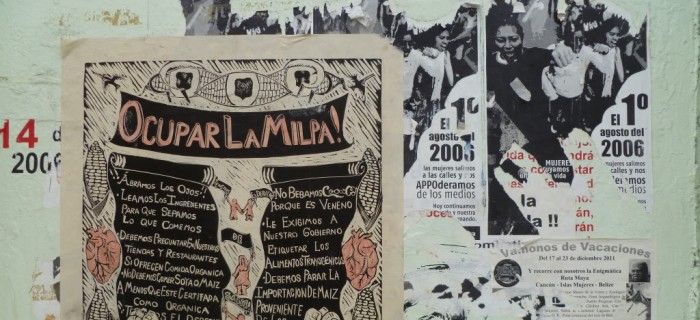
 Between meals, we listened to stories that uncovered centuries of history, and recent decades of struggle, which had carried the very food we were eating to our plates. In San José Mogote we learned about the different indigenous groups who settled the Oaxaca valley, and the squash, maize, and bean crops that they domesticated there. Then in the Northern Sierra mountains, we were told how Monsanto’s transgenic corn was cross pollinating with anything in its path and attacking heritage maize varieties. We walked amidst carefully preserved “milpas” (small, diversified plots) with traditional varieties of squash, maize, and bean that have been grown together since pre-colonial times.
In Capulalpam, community leaders shared how external mining interests threatened the natural environment, the land and waterways vital for local agriculture, fishing and eco-tourism. As we took in these varied experiences and stories, a common theme became apparent: Resistance.
The customs, lands and livelihoods of campesinos are under attack. The traditional systems that have fed and sustained people of Oaxaca for centuries are being pushed out and replaced by the products of globalization. The huge Walmart that greeted us every day as we entered and exited Oaxaca City served as a potent and omnipresent reminder of that. Yet all around us, people were standing up and speaking out.
All the people we met, and their acts of resistance, reached into the depths of the fibers of our being. They touched aspects of our humanity long ago forgotten. And in doing so, they led us to question the values of “progress” and “development” we are asked to accept as universal truths. Time and again, our experiences in Oaxaca left us asking: What direction is forward? For whom? And why?
For me, these lingering questions left a powerful yearning. Yearning for information. Yearning for answers. And yearning to build awareness about a world of resistance—and alternatives to corporate globalization—that is largely hidden from us.
Stay in the loop with Food First!
Get our independent analysis, research, and other publications you care about to your inbox for free!
Sign up today! Help Food First to continue growing an informed, transformative, and flourishing food movement.