Holiday Seasonings: Food Traditions from Around the World
Food traditions from around the world and a recipe for Cuban buñuelos
‘Tis the season for holiday celebrations—and of course, those special holiday dishes that we look forward to all year round. Since every culture has its own unique way of celebrating the holidays through food, we thought we’d give you a glimpse of yuletide food traditions in our Food Sovereignty Tour destinations.
Basque Country — The Festival of Santo Tomás
In the Basque Country, holiday celebrations begin on December 21 with the Festival of Santo Tomás. With the best turkeys, fruits and vegetables from the baserias (farmhouses) display on stalls, the festival is a remnant from the days when rural tenants would travel to the cities to pay rent and sell their produce. People take to the streets—often in traditional casera costumes—to dance, eat txistorra (cured sausage), and drink txakolí (an effervescent dry white wine).
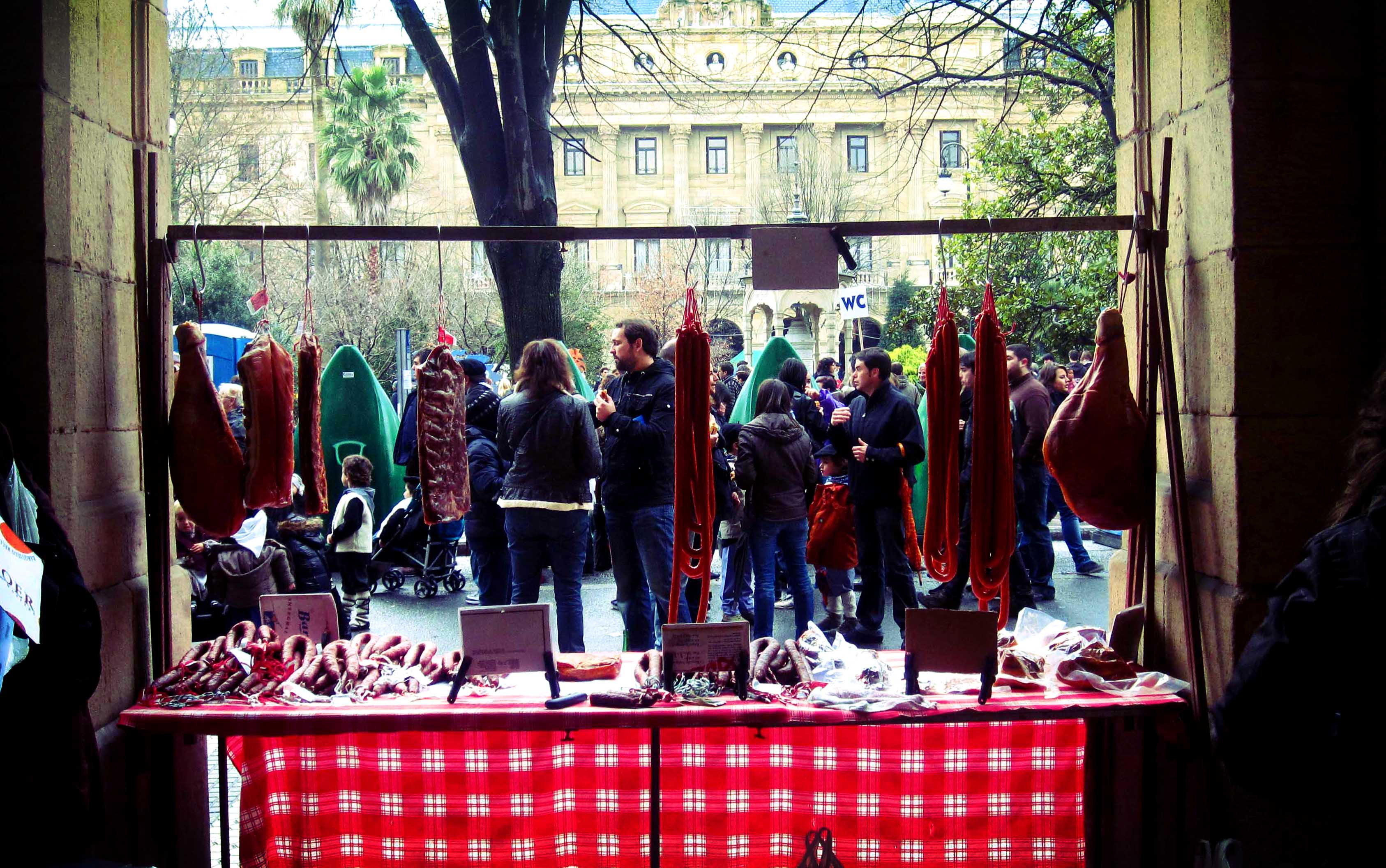
Artisanal meats on display at the Festival of Santo Tomás. Photo courtesy of Basquestage.com.
Italy — The Land of Holiday Breads
Stay in the loop with Food First!
Get our independent analysis, research, and other publications you care about to your inbox for free!
Sign up today!During the holidays, a stunning array of sweets can be found in the Mercantinos di Natale (Christmas Markets) that pop up around Italy, particularly in the northern cities. Perhaps the most iconic holiday foods are the many types of holiday pane or breads. Bread varieties include star-shaped pandoro, a sweet white bread dusted with powdered sugar, and panettone, a dome-shaped loaf filled with raisins and candied citrus peel. Despite it’s name, panforte is actually a chewy, dense and heavily spiced fruitcake rather than bread. Finally, panpepato is a heavy gingerbread cake flavored with spices, nuts, dark chocolate and candied fruit.
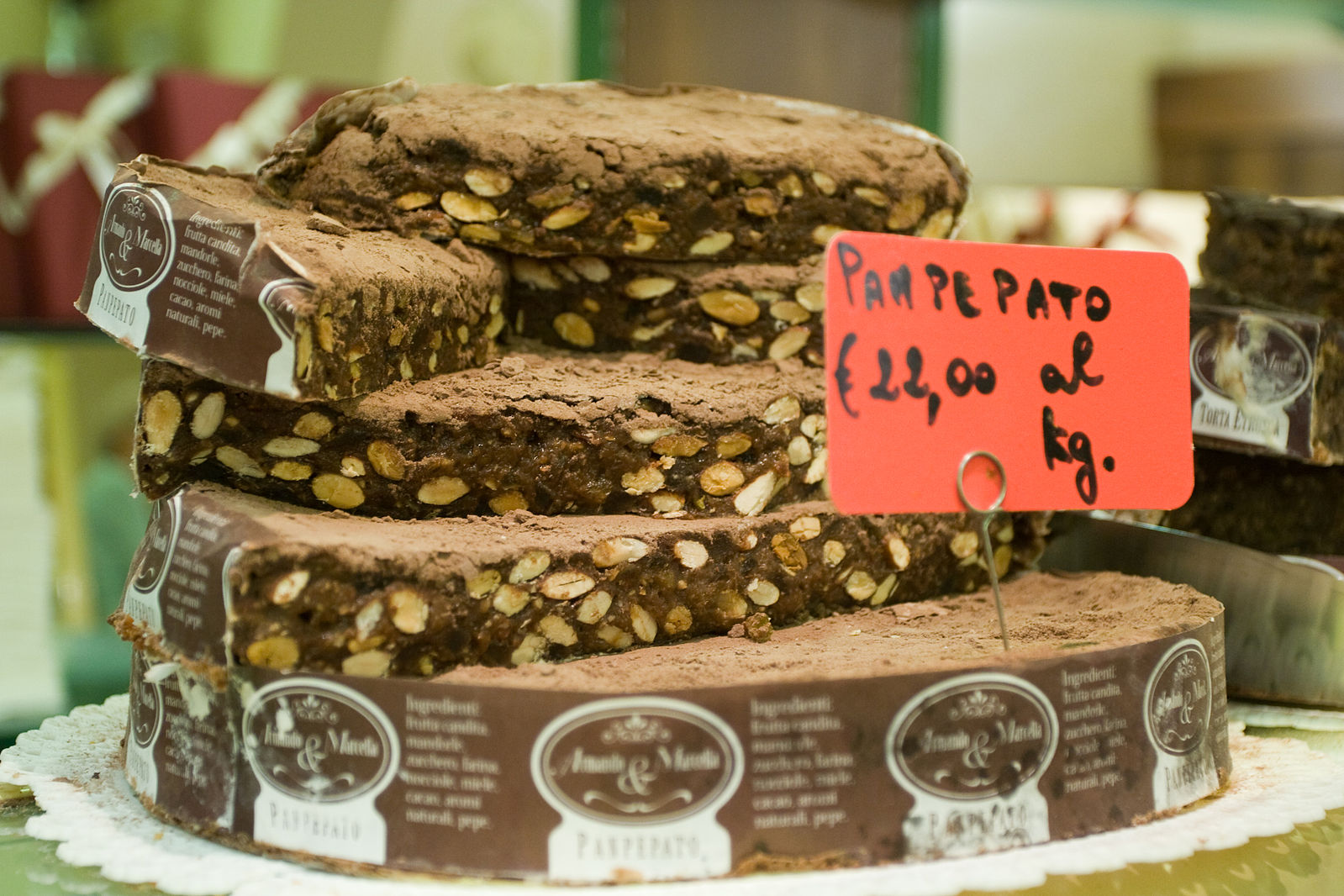
Panpepato at a shop in Tuscany, Italy. Photo taken by Marco Varisco, courtesy of Wikimedia Commons.
South Korea — An Emerging Christmas Tradition: The Christmas Cake
Although South Korea is officially Buddhist, Christmas (Seongtanjeol) was recognized as a public holiday in 1945. Christmas day is popular for shopping and eating out at restaurants and is considered a romantic holiday for couples—while New Year’s Eve is reserved for family get-togethers. One emerging holiday tradition that is distinctively Korean is Christmas cake. These holiday sweets are special not for what is on the inside (usually just a simple sponge cake), but rather for their festive Christmas and winter-themed decorations, such as penguins, Christmas trees and, of course, Santa.
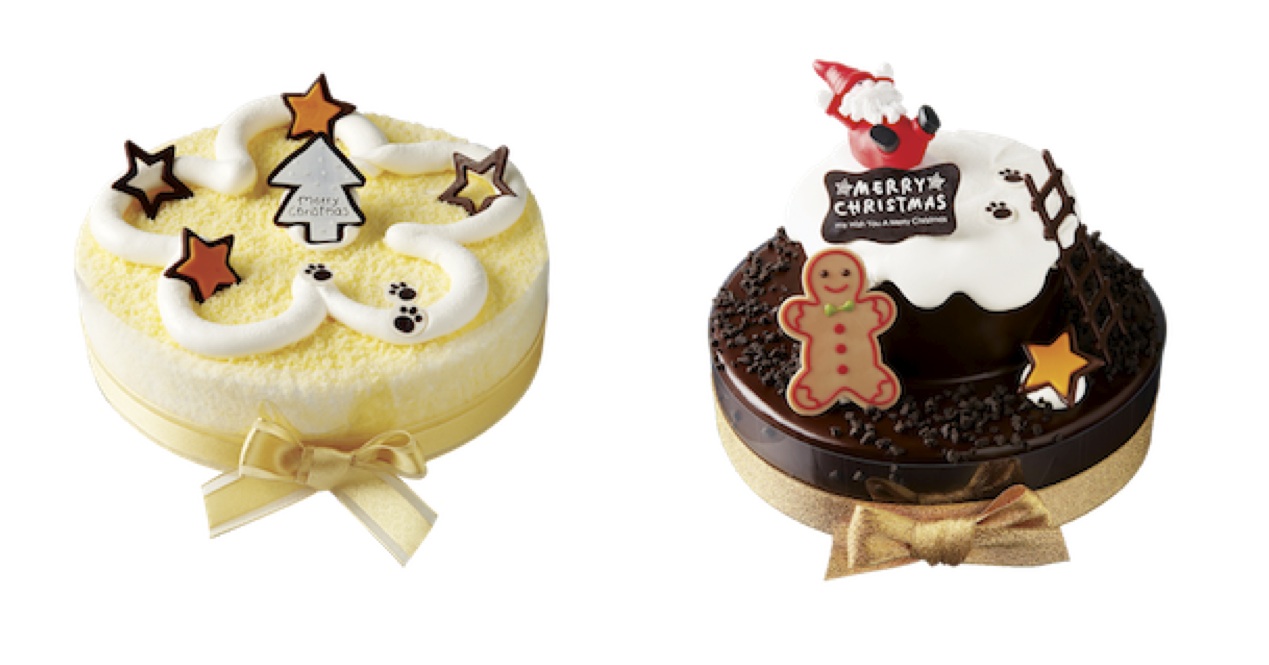
Two of this year’s Dunkin’ Donuts Christmas cake offerings, sweet potato and chocolate, for sale in South Korea. Photo courtesy of Dunkin’ Donuts.
Oaxaca, Mexico — Night of the Radishes
The colonial city of Oaxaca, Mexico, has what is arguably the most unique and unusual Christmastime celebration: Noche de Rábanos (Night of the Radishes). Every year on December 23, the zócalo (main plaza) is taken over by elaborate sculptures carved from giant radishes—some as big as six pounds and almost two-feet long! Local artisans have been competing for cash prizes in this annual tradition for over a century. Radishes (which are actually native to China) were introduced to Oaxaca by Spanish missionaries in the 16th century. The indigenous communities already had a strong woodcarving tradition, so missionaries suggested that market vendors create radish sculpture displays to entice shoppers into their stands. Today, the gigantic radishes are grown specifically for the event by leaving the vegetables in the ground long after the normal harvest.
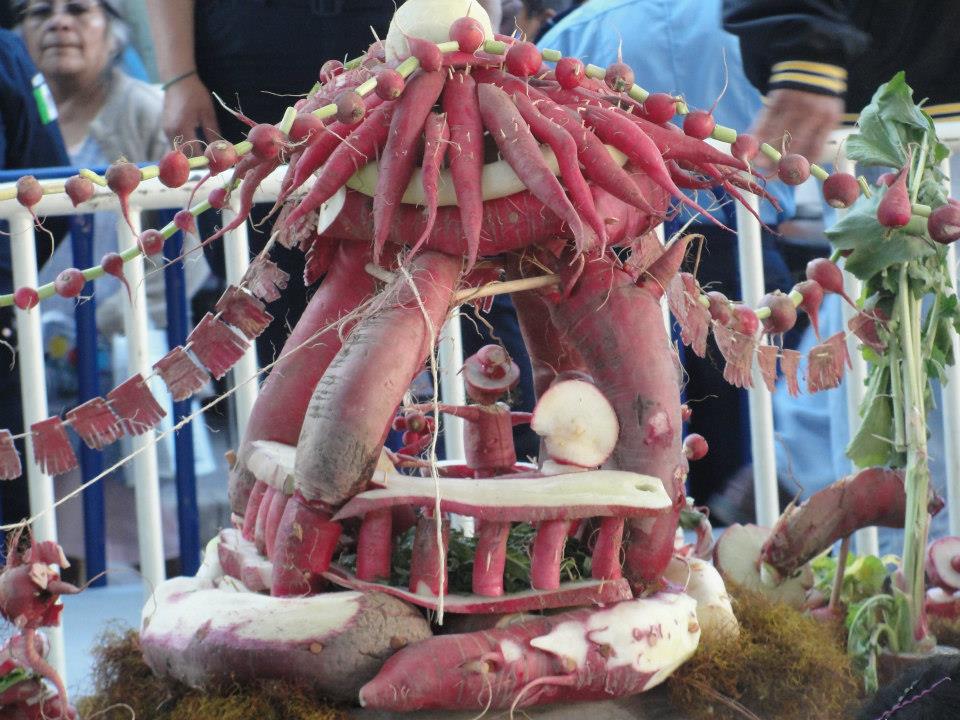
An elaborately detailed radish sculpture from the 2012 Food Sovereignty Tours delegation to Oaxaca.
Bolivia — Late Night Feasts
Christmas in Bolivia today is a deeply religious holiday. After attending midnight mass on Christmas Eve (Misa del Gallo, or “Mass of the Rooster,” so-named because families return very early in the morning), families gather for a holiday feast. Traditionally, picana de navidad—a soup of chicken, beef, corn and spices—is served on Christmas Eve, alongside lechón (roasted pork) or roast beef, salad and tropical fruits. Another important Christmas tradition is the canastón, a large gift basket of staple foods, panetón (a holiday bread derived from the panettone brought by Italian immigrants) and cidra (sparkling cider).
 Bolivian picana de Navidad, a corn stew traditionally eaten for Christmas. Photo courtesy of All About Cuisine.
Cuba — A Meal of Cuban Comfort Foods
Until 1998, Christmas was actually banned in Cuba for three decades! Today, many Cuban cities celebrate with parrandas, festivals that often include parades of elaborate floats, fireworks, and costumes. Traditionally, large family gatherings assemble on Noche Buena (Christmas Eve) for a pig roast feast. Lechon asado is served alongside traditional sides like moros y cristianos (black beans and rice) and mariquitas (fried plaintain chips). For a sweet holiday treat, Cubans enjoy buñuelos de Navidad—cassava and sweet potato fritters (see below for a recipe)—and crema de vie, a Cuban version of eggnog.
 Cuban buñuelos made from yucca (cassava) and sweet potatoes. Photo courtesy of Saveur.
Cuban Buñuelos (Yucca Fritters)
Adapted from the Journal Sentinel Online and Saveur
Makes about 24
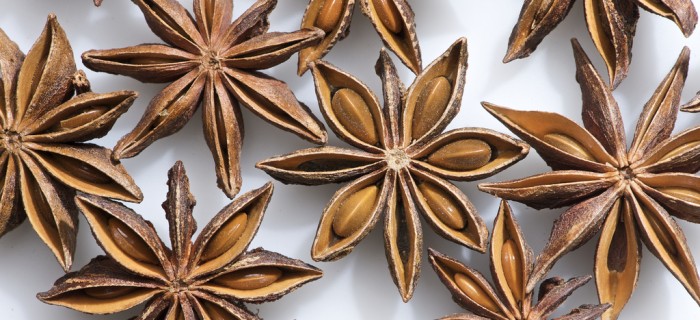
Many South American countries enjoy their own variation of this deep-fried snack. The Cuban version is made with yucca (cassava) and sweet potato flavored with anise. The dough is shaped into figure eights and topped with syrup.
Ingredients
For the dough
1 pound cassava (yucca), peeled and cubed
1 pound sweet potato, peeled and cubed
1 egg, lightly beaten
1 teaspoon ground anise
1 teaspoon salt
½ cup flour
For syrup topping
2 cups sugar
1 ½ cups water
1 stick cinnamon
Instructions
Put yucca and sweet potatoes in a medium pot and cover with cold water by 2 inches. Bring to a boil over medium-high heat and cook until a fork can be easily inserted, but the vegetables are not too soft.
Drain and place softened vegetables in a large bowl and mash. Set aside and allow to cool to the touch before adding egg, anise, salt and flour. Knead until dough it tacky, but no longer sticks to your fingers.
Pull off about 2 heaping teaspoons of dough and roll it into a rope approximately 6 inches long and ½ inch wide. Fold into a figure-8, pressing so the dough will hold its shape.
Place sugar, cinnamon stick and water in a medium saucepan and simmer over medium heat until pale gold, 40-50 minutes.
Meanwhile, pour oil into a large skillet to a depth of 2 inches and heat to 375 °F on a candy thermometer over medium-high heat. Fry dough in batches, turning them, until golden brown, about 2 minutes. Drain on paper towels. Serve warm, drizzled with a little syrup.
--> // // Removidas / comentadas de forma segura. Se precisarem no futuro, reimplementar sem misturar HTML comment com PHP. ?> Help Food First to continue growing an informed, transformative, and flourishing food movement.