Life on the Bolivian Altiplano: Reflections from a Food Sovereignty Tour Participant
Bolivia is a fascinating country. I lived there for several months in the early 1970s and it changed my life, opening my eyes to the realities of poverty and repression and the role of the U.S. government in supporting dictatorships. I returned to Bolivia in 2009 as part of a solidarity delegation looking at Bolivia’s extraordinary social movements and their fight against neoliberalism. It was incredible to learn from people on the front lines of this effort and to see the gains that had been won through tenacious and fearless struggle over many decades.
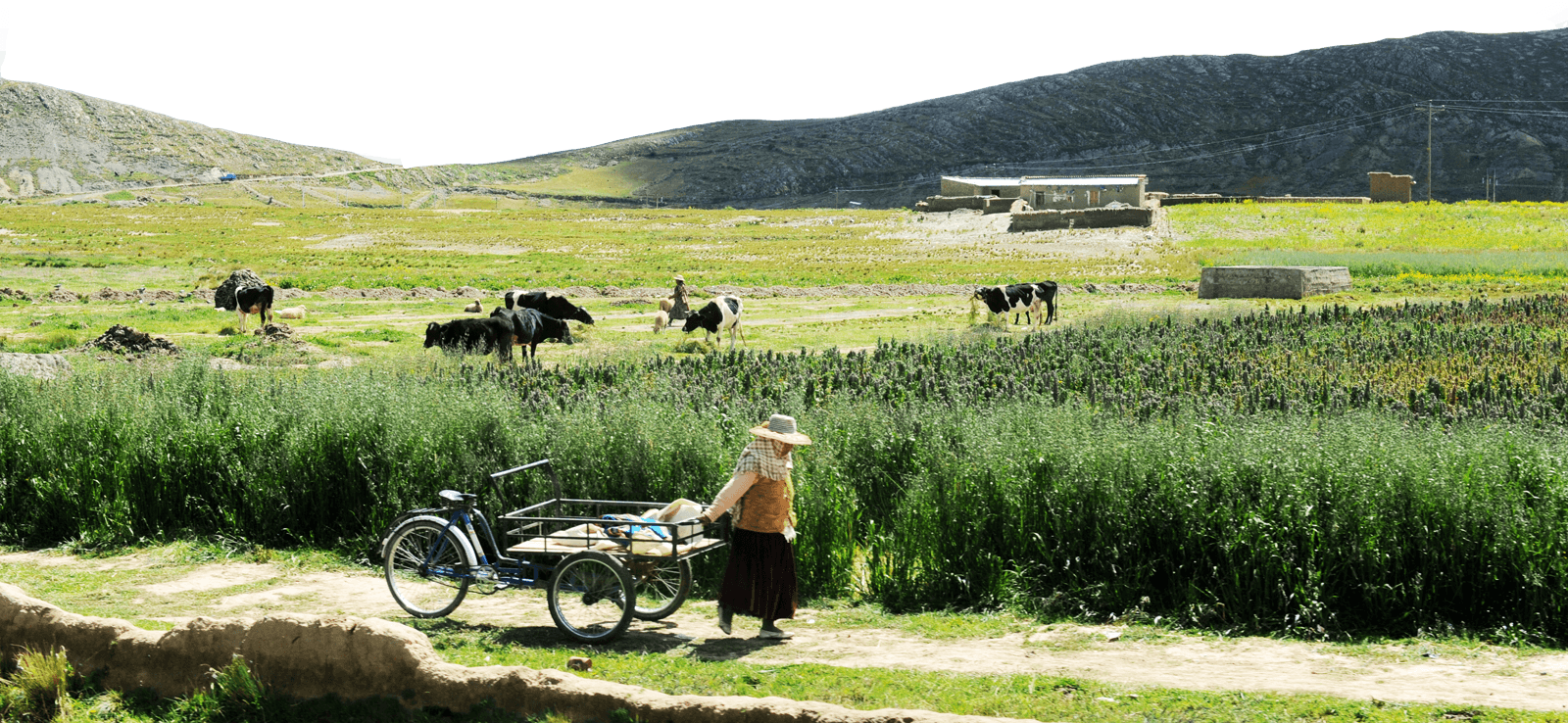
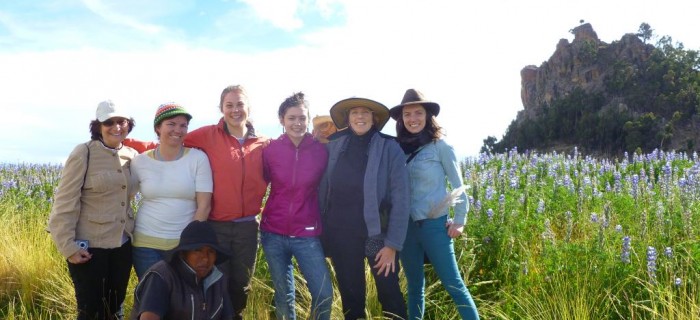
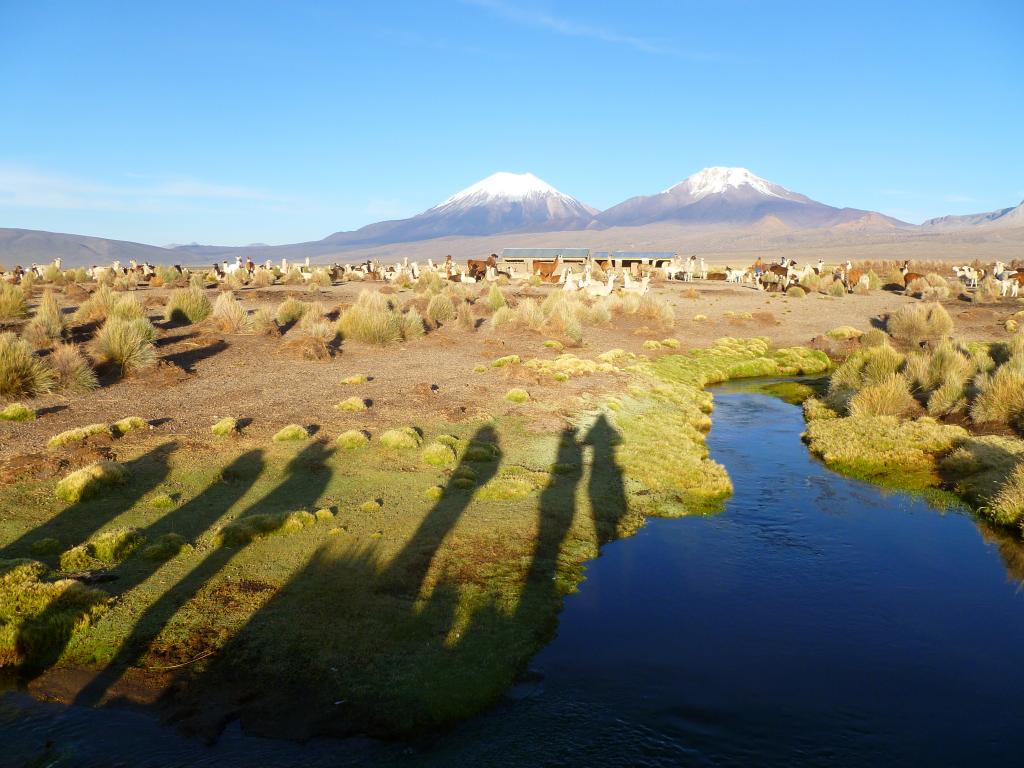 I returned again in March of 2014 for a very special Food First tour that spent ten days on the Altiplano—the Andean high plateau between 12,000 and 13,000 feet above sea level. It was not a “tour” in the traditional sense, but rather a steady immersion into Altiplano life, seen through the lens of food production. While we spent time in La Paz/El Alto, an urban area now home to close to two million people, and Oruro, the country’s traditional mining capital, most of our time was spent “off the beaten track,” driving on little-used roads in areas devoted to quinoa production and llama herding.
I also left with a much better understanding of the Aymara culture and a new appreciation of the resilience and fortitude of a people who have survived centuries of domination.
In areas like the farming and fishing villages on the shores of Lake Titicaca, families work subsistence plots of potatoes, quinoa and fava beans and raise small herds of sheep, as they have done for hundreds of years. We stayed overnight with rural families, sharing meals, conversation and a bonfire. The landscape is beautiful and the people humble and generous. They follow ancient Aymara traditions of community organization, alternating who assumes the leadership position every few years. Life appears so good there, but it is also precarious. The family I stayed with had five grown children, all of whom had moved to El Alto— a city of a million, mostly indigenous people that sprang up over the last 30 years—because there was no way for all of them to make a living in their village. Pollution from mining and other industries have caused great harm to fishing in the lake and made the water unsafe to drink.
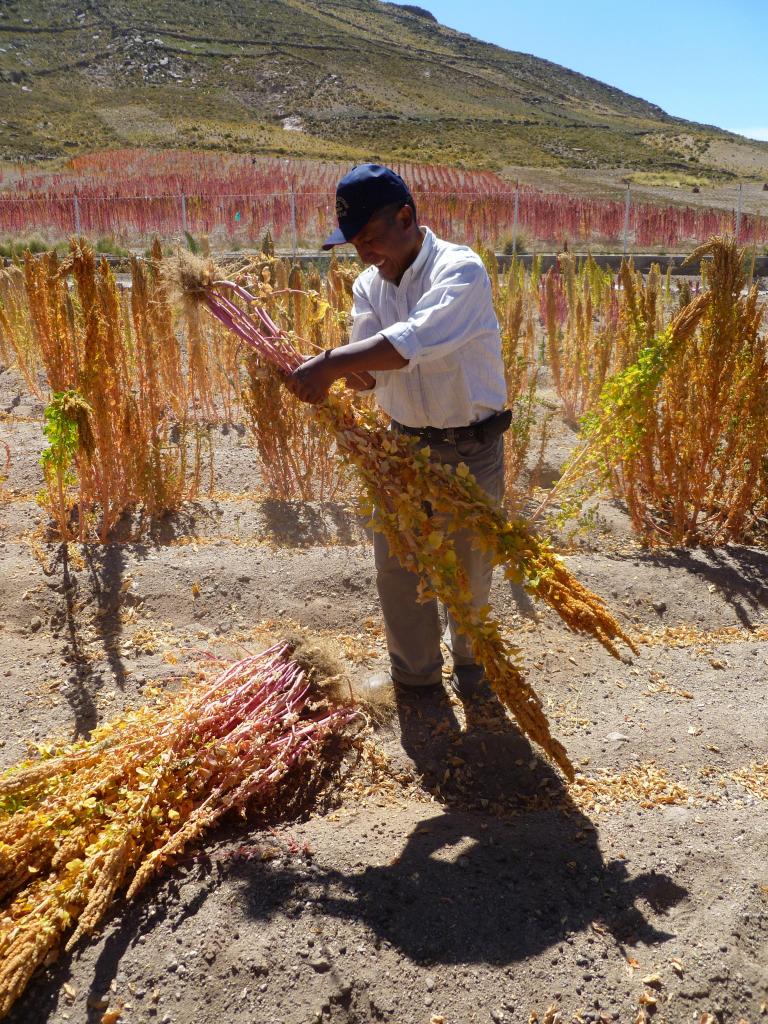 Contradictions like these are everywhere. On the road through the region where “royal quinoa” (quinua real) is grown for export, you can see old Inca stone fences on hillsides marking farming or grazing areas, and see remnants of hillside terraces. Historically, quinoa was grown on the hillsides, where the soil was better, and the flat areas were used for llama grazing, which produced copious fertilizer for the hillside crops. Today, huge areas of the flatlands are planted with quinoa, with a significant decrease in llama herds. We saw areas that had been over-farmed, exhausting the fragile soil and eliminating native grasses that provide wind barriers. We could often see spirals of dust forming in the distance due to erosion. Many people in the area are prospering from the global demand for quinoa, and in a country as poor as Bolivia one cannot fault anyone for trying to have a better life. But we could not help wondering if the area would one day look like the Oklahoma Dust Bowl in the United States, where farmers altered the ecological balance by uprooting natural grasses and planting wheat to satisfy market demand.
The soil of the southern and central Altiplano does not support many crops. The area is home to llama and alpaca herders, who care for their herds the same way they have done for centuries. We visited Sajama National Park, a spectacularly beautiful area surrounded by snow-capped mountains. Our host gave us lessons in communal llama herding and we got up at dawn to help move several hundred female llamas and their young to a different area. The community is fiercely protective of its environment and way of life. It welcomes tourists (in manageable numbers), but when an outside investor built a large (and rather ugly) hotel in the area without the permission of the community a few years ago, the people saw to it that the facility did not open. It stands empty as a testament to popular resistance.
 I learned a lot on this trip–about agroecology; the consequences of migration on the environment; and the need for a coherent government strategy to promote sustainable quinoa and llama production. I also left with a much better understanding of the Aymara culture and a new appreciation for the resilience and fortitude of a people who have survived centuries of domination.
Our tour coordinator, Tanya Kerssen, imparted a vast amount of information as we were driving through the countryside, and our Bolivian guide, Gabriel, an expert on the country’s geography, was a source of fascinating information on land formations and on the myths and legends of the Aymara people. All told, it is a great experience that anyone interested in food issues, ecology, development, indigenous life and Third World politics would never forget.
Stay in the loop with Food First!
Get our independent analysis, research, and other publications you care about to your inbox for free!
Sign up today!Explore Andean food and farming systems in March 2015! Stay tuned for details, and click here for more information.
--> // // Removidas / comentadas de forma segura. Se precisarem no futuro, reimplementar sem misturar HTML comment com PHP. ?>
 Help Food First to continue growing an informed, transformative, and flourishing food movement.