
Meet the TCs: Corey Blant, Oaxaca Tour Coordinator
As a tour participant turned Tour Coordinator, Corey Blant has a unique perspective on the lasting impact of educational travel and experiential learning. In his role as Oaxaca Tour Coordinator, Corey draws from his academic background in Behavior & Cognitive Science (as well as Latin American & Caribbean Studies and foreign language instruction) and professional experience leading immersive learning delegations with ATRAVES in Nicaragua—where he also launched the organization’s first food justice initiative.
 Corey is an educator, organizer, and activist with a passionate interest in all things Latin America—especially the food! When he isn’t preparing Nicaraguan culinary specialties in his spare time or hanging with Calala, his adopted Nicaraguan canine companion, Corey is working on a campaign to combat unfair labor practices in his hometown of New York City.
Movements connected with Corey to discuss the food sovereignty movement in Oaxaca, his favorite Oaxacan foods, and reconnecting with friends and colleagues on this summer’s upcoming delegation.
“There’s something that always draws me back to Oaxaca. Since the first time I went down there I felt this strong pride from all of the Oaxacans I was interacting with—the farmers, academics, [local Tour Coordinator] Juan de Dios. Everyone we were talking to was really proud of their culture and heritage and what it is they were trying to preserve—not just in the culture of food but also the traditional cultures and the Zapotec roots of the region. I found that to be really amazing and inspiring. If only we could all be so proud of our communities, it would be a totally different word. Every time I think about going back to Oaxaca, I get really fired up about that aspect of the experience.”
You have extensive experience leading delegations, both with ATRAVES and Food Sovereignty Tours. What do you find inspiring about immersive educational travel?
I’ve always thrived outside the classroom. I was never the kind of student who was really excited to sit inside and read the textbook. I think the opportunity to go somewhere, meet with people and share your own stories and hear their stories is really powerful. It’s an experience that’s going to be more meaningful and stay with you in the long term and is also something that really (this is kind of cheesy to say) brings the world together—the fabric of how we’re all connected, it taps into that in a great way.
You were a participant on the Oaxaca tour, and then you attended as a tour assistant, and now you’re leading the tour. What stood out to you as a participant that made you want to lead future tours?
Stay in the loop with Food First!
Get our independent analysis, research, and other publications you care about to your inbox for free!
Sign up today!There’s something that always draws me back to Oaxaca. Since the first time I went down there I felt this strong pride from all of the Oaxacans I was interacting with—the farmers, academics, [local Tour Coordinator] Juan de Dios. Everyone we were talking to was really proud of their culture and heritage and what it is they were trying to preserve—not just in the culture of food but also the traditional cultures and the Zapotec roots of the region. I found that to be really amazing and inspiring. If only we could all be so proud of our communities, it would be a totally different word. Every time I think about going back to Oaxaca, I get really fired up about that aspect of the experience.
Another one of the lessons I’ve taken away is the resilience that you see in Oaxaca and Oaxacans. It’s something that you see around the world, but it really resonated with me, the way people from the different villages and people in Oaxaca City itself, have gone to such great lengths to preserve their tradition and roots in the face of such overpowering forces.
But I think that in Oaxaca, one of the things that I am most cognizant of all the time is people really fighting to keep their traditions and their culture and their heritage alive and to maintain their own ownership over that culture and that tradition and that heritage.
What are the challenges faced by Oaxacans and the overarching forces that threaten these traditions?
Right now, we’re seeing infiltration of the neoliberal forces in Mexico and have seen since NAFTA in the early ’90s. This pressure—mostly coming from the United States, but I would say from the global economy as a whole—pushing into the region and the traditional ways of life. On the edge of Oaxaca City, there’s a giant Wal-Mart that has threated the traditional ways that people would have shopped in the market or just bartering with their neighbors. In the context of food, there has been so much transgenic and genetically modified corn that’s being pushed into the region in a variety of ways and that threatens something that is so central, not just as a food but something that has a spiritual component to the people.
What kinds of groups are involved in these resistance movements? Young people, farmers, indigenous people?
In my experience, it’s really everyone—everyone from students to elderly individuals in the community. It’s farmers, intellectuals, activists; it’s everyday citizens from the region. On the last trip [in 2012] when we were down there, there was a group of people who had been displaced by a conflict surrounding a transnational mining company that the village had tried to stand up to. The company had hired paramilitary thugs and there were village people who had been killed. The people no longer felt safe living in their own city, so they fled to Oaxaca City and were camped out in the central square. They had been camping in the square for some time, many months, when we got there. It just so happened that we came at this pivotal moment. We were there on the last trip in December, and December is a time when there’s a lot of tourism in Oaxaca City. The police had decided that they didn’t want these protestors to tarnish the image of Oaxaca for the tourists who would be visiting during this time, so they forcibly removed [the protestors] to a site a few blocks away from the square. It’s a terrible story, but it goes to show that the situation was so grave that people were forced to be involved from all walks of life. In this encampment, there were grandmothers, infants who probably spent most of their life living in this protest camp, and I think that’s really telling of who is involved in the movement in Oaxaca in general. It’s everyone out of necessity.
Do you get the sense that there’s optimism on the streets or is there a feeling of urgency and crisis?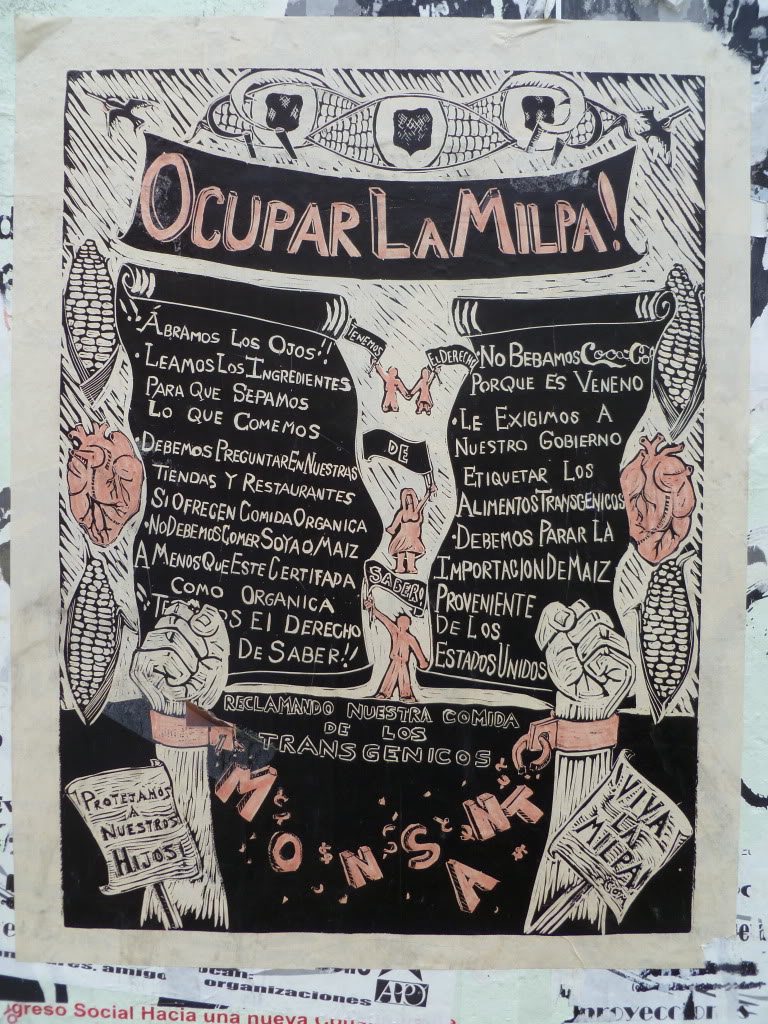
I’ve seen changes. The first time that I traveled in 2011, I remember things being sort of lighthearted. 2012, when we went back, it was at a time when politically the country was changing a lot. There was a new president that had just come into power and there had been pretty substantial student protests in Mexico City as this new president entered his presidency. Because of everything that had been happening in that region of the country, there had really been a clamp down. You felt that in Oaxaca and people commented on that. In general, as I said earlier resilience is a big thing there. People are very resilient and they seek solutions and autonomy and self-sufficiency in the face of greater circumstances and that is very inspiring and very optimistic and positive.
Food Sovereignty Tours is all about highlighting successful alternatives. Could you talk a little bit about the exciting movements that are happening on the ground in Oaxaca?
I can think of a couple of different places that are right off of the tour. One is a restaurant, Itanoní, a local tortilleria. They decided that they are going to source all of their corn from local families. They connect to individual families and family farms throughout the region. The guy who runs it is an agronomist and he has built these relationships with the families over the years and in that way has not only created a restaurant that is popular but also created these really strong ties to communities and created a lot of security for those families and those particular communities because he’s always going to be buying corn from them and they can rely on him as someone who is going to pay a fair price and be a constant presence. His argument goes even beyond the fair trade aspect of things, but he also believes that the corn tastes different based on the specific microclimates, so from the foodie perspective he’s saying that he can offer all of these different flavors because he’s sourcing all of these really great family produced corn.
Since we’re talking about food, what would you say is your favorite Oaxacan dish and why?
There are so many different things! Champurrado is this warm morning chocolate and corn beverage that is just to die for. That is something that I have only ever had in Oaxaca and look forward to immensely. I just have distinct memories of drinking it after eating a full meal, and I shouldn’t have, and exploding and just wanting to take a nap, and it’s only nine in the morning. I would also have to say moles because that is also something that is really special and as many times as I’ll try a mole outside of Oaxaca, it never compares.
Any feelings about chapulines (grasshoppers)?
Oh my god, I love chapulines! Thank you for reminding me! They are scrumptious. In fact, another one of the meals that is just a classic is breakfast is just a bowl of beans with epazote, the local herb, and chapulines. May not sound like much, but it is just the perfect combination of salty and crunchy—so good. And also chapulines on just a tortilla.
How did you overcome the initial “yuck” factor?
 I’ve always been the kind of person who wants to eat something just because everyone thinks its gross, but just think of them as sort of salty, spicy, crunchy snack, don’t think of them as little insects with the spines on their legs. The first time you eat chapulines, one of the things you learn is that the legs have these little spines that stick out of them that scratch your tongue and your throat. But if you don’t think about that, it’s awesome, like potato chips.
What else about Oaxaca are you looking forward to on this next trip?
Juan de Dios is really a special individual and I think it would be unfair to not give him a shout here. I really look forward to reconnecting with him every time we do a meet up. I have really enjoyed being able to see how both of us have grown, developed, and to share new ideas, experiences, and just re-hash some of our own political beliefs and philosophies—and also getting to accompany other people as they get to know him, too. He’s such an inspiring person who really does have so many wonderful tidbits to offer. And I think he really is a highlight for myself and for most other people who go on the tour.
What do you find most rewarding about being a tour coordinator?
When we all come together and have the experience of sitting down in a peasant’s backyard and are served this very traditional and ceremonial food and are joined often times by the entire family—from grandparents to grandchildren and a couple of cats and dogs—everyone sitting together in someone’s home, it’s really something special and amazing. You feel the warmth and generosity, and what a remarkable and fortunate experience to be able to share that and be able to connect with the people in that way.
As an activist, organizer, and an educator, what do you hope people will gain from their experience in Oaxaca?
Each person comes down with their own belief or idea bout what the trip is going to mean to them, why they want to go on a Food Sovereignty Tour in the first place. Often times, there are people who come from a political side and consider themselves to be liberals or lefties, so they want to engage with Food First in that way. Sometimes it’s people who are foodies who really want to connect to a place by connecting to that place’s food and food culture, and other times its people who are coming from a food justice background who may already be connected to the food sovereignty movement. For me, it’s been really rewarding to have the opportunity to interact with all of these people and what I hope to see people take away is just an understanding of what food sovereignty means in Oaxaca, but also what food sovereignty can mean in their own lives and their own communities. One of my favorite moments on the trip is when we get to the very end and we have our final reflection and we have the opportunity to really synthesize everything that we’ve experience over the course of the last eight or ten, days and to say, “When I go back, this is what I want to carry with me, this is what I want to do differently or this is what I am taking away from my experience.”
How would you summarize the food sovereignty movement in Oaxaca?
Something that I was so cognizant of the first time I went to Oaxaca was the fact that in Oaxaca there was a McDonalds or Burger King in the square and no one was going there. It became pretty apparent throughout the trip that people didn’t go to this [fast food restaurant] because people were choosing to opt out of anything like that. By and large, people were choosing to eat very traditional meals and they were eating tortillas and tlayudas and drinking champurrada, whatever it was that their ancestors had been having, they were fighting to preserve that and to keep their local system alive. When you talk about food sovereignty, there’s so many different players involved and there’s the corporations, the governments, the peasants, the city dwellers—there’s so many people who come into play and its not, as I’ve learned over the years, it’s not necessarily just about food. There are lots of different sides of the food sovereignty movement; there are lots of different forms of oppression. But I think that in Oaxaca, one of the things that I am most cognizant of all the time is people really fighting to keep their traditions and their culture and their heritage alive and to maintain their own ownership over that culture and that tradition and that heritage. In many of the archeological sites that we’ll visit with Juan de Dios, it’s clear that this isn’t a museum in the traditional sense or something that’s funded by the federal government; this is the community having ownership over and keeping their own communal history alive in this way. I think that’s fundamental to what’s going on there, and that’s food sovereignty for Oaxaca.
What have you taken back from these experiences and how do you see it influencing the work that you’re doing now?
 At this point in my life, I’m constantly thinking about what makes a strong community and what allows communities and empower communities to overcome the tremendous odds that face them. Being able to meet and talk to so many people from all over the world who are trying to fight different injustices in their own backyard and their own communities is always something that inspires me and really, if nothing else, makes me want to do the same thing with as big a smile as they always have. I’m always struck by the generosity and the warmth of the Oaxacans. I try to carry a little bit of that with me.
 Help Food First to continue growing an informed, transformative, and flourishing food movement.