Oaxaca: Land of Diversity
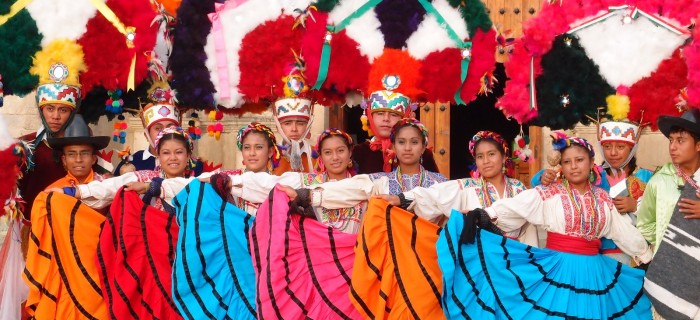
The Mexican state of Oaxaca is well known for its rich and diverse gastronomy. This vibrant food culture is rooted in the region’s great geographic and biological diversity, which over time has generated a tremendous ethno-linguistic diversity. Currently, sixteen highly differentiated languages are spoken in Oaxaca.
Oaxaca State is located in southeastern Mexico. The Eastern Sierra Madre, an important mountain range, crosses in the north and has peaks as high as 3,270 meters above sea level (Mount Pelón in Ixtlán). The Western Sierra Madre or Southern Sierra crosses the state in the south, and has peaks as high as 3,750 meters above sea level (Mount Guiexoba in Miahuatlán). The two mountain ranges are part of the same mountainous system that runs almost the entire length of the American continent, from the Rocky Mountains in western Canada to the Andes of Patagonia, in southern Chile. Both mountain formations encircle the Central Valleys, which form a plateau over 1,500 meters above sea level, surrounded by mountains that reach up to 3,200 meters above sea level.
The Oaxacan territory is been divided into eight geographic regions: the Central Valleys, the Cañada, the Mixteca (High, Low and Coastal), the Costa Chica, the Southern Sierra, the Northern Sierra, the Papaloapam Basin and the Tehuantepec Isthmus. Each of these regions has its own microregions and contains characteristic flora and fauna, with many endemic species including plants considered living fossils from the Mesazoic Era, such as the bola palm (Zamia fufuracea) and the royal palm (Dioon rzedowski). Oaxaca contains the majority of the country’s ecosystems, from forests and grasslands to coastal dunes and mangroves.
 Oaxaca’s varied topography and geology have provided numerous soil and climate types, creating macro and micro ecosystems with an enormous variety of species of plants and animals. There are 8,431 recognized species of vascular plants, and of those a total of 702 have been registered as endemic, meaning they are not found in any other region of the world. This rich diversity of plants provides the basis for Oaxacan cuisine. Numerous leaves, flowers, stems and stalks, roots, bulbs, seeds, fruits and pollen can be converted into elements that provide flavor, color, consistency and aroma to the foods that are prepared in the various regions of Oaxaca.
Numerous animals (mammals, birds, reptiles, amphibians and marine animals) and insects are also integrated into Oaxacan cuisine to increase its protein content and enhance flavor. This is done according to the specific cultural characteristics and rituals that different ethno-linguistic groups have around food (e.g. festivals, daily consumption, food preservation).
The culture of corn or “maize” (Zea mays) emerged with the development of Mesoamerican civilization. Agricultural historians believe that the ancestor of maize is a wild grass called teosinte (Zea diploperennis) whose small cob with only a few grains was transformed with human intervention. In other words, maize is a product of culture.
Evidence shows that the cultivation of corn began 5,000 years ago, in the valleys of Tehuacan and Oaxaca. Since the year 2,000 BCE, an intensive agricultural system developed through community organization with efficient irrigation systems, based on the storage of water in the small streams of the foothills, and in small dams connected to water distribution canals that led to cultivated lands. Along with the construction of terraces on slopes and hillsides, this method allowed the land to be constantly irrigated.
Stay in the loop with Food First!
Get our independent analysis, research, and other publications you care about to your inbox for free!
Sign up today!The “milpa”—a farming system consisting of corn, beans, and squash, together with other species such as chiles, huahtli (a type of amaranth), and cotton—created the material conditions for the rise of the great ancient civilizations of Mesoamerica including the Olmec, the Maya, the Zapotec and the Toltec.
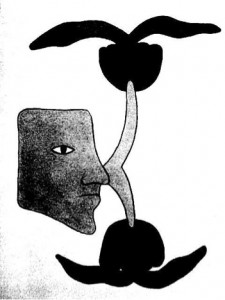 The word “Oaxaca” comes from the nahuatl words “huaxyacac” meaning huaje tree (Leucaena sculenta) and “yacatl” meaning nose, point, extreme or prominence. It can be interpreted as “The most prominent place of the huajal” or “On the hill of the huajes.” The huaje is a leguminous tree that grows to be 6 to 15 meters tall and is found from the state of Jalisco down to the state of Chiapas, primarily in low deciduous forests. A Pre-Hispanic hieroglyphic from the Oaxaca region shows a head in profile with a branch sprouting from the nose with two flowers and huaje pods.
There are numerous traditional uses of the huaje. From February through May, for instance, the green seeds from a red pod are consumed raw in tacos with salt; on top of beans; or in salsa with tree chili (chile de arbol) and tomatillo. The young sprouts of the leaves and flowers are eaten in salads or with beans. They are also used in traditional medicine to expel intestinal parasites. In some regions such as the Mixteca, it is used to alleviate stomach pain.
The European conquest in the fifteenth century sparked a massive ethnocide and with that the permanent disappearance of many peoples and their languages, practices and cultures. In Oaxaca, the people once spoke yopi, pochuteco, ojiteco, aguacateco, ixtlateco, solteco, among others. Astoundingly, Oaxaca remains one of the most culturally and biologically diverse places in the Americas, a diversity expressed in its renowned gastronomy.
*Juan de Díos Gómez is an anthropologist and journalist based in Oaxaca, Mexico and is the leader of Food Sovereignty Tour’s Oaxaca delegations.
This article was translated and adapted from Spanish by Haley Currier and Tanya Kerssen.
 Help Food First to continue growing an informed, transformative, and flourishing food movement.