On the Table: A Glossary of Maize

“olotes”
That the Inuit have dozens of words for “snow” is a common bit of trivia that illustrates how prominent the substance is in Arctic life. It should come as no surprise, then, that the centrality of corn or maize to Mexican lives and livelihoods has given rise to a rich and colorful vocabulary that reflects the incredible versatility of this all-important crop.
While the tortilla and the taco have made their way into the English language—and North American diet—here are some less familiar words that give a peak into the nuances of corn in Mesoamerica.
Food & Drink
Atole – A thick beverage made from ground corn, rice flour or other ingredients, mixed with water or milk and boiled. It may contain sugar, cinnamon, chocolate, honey or fruit pulp. Traditionally a standard breakfast item for those who could not afford cocoa.
Elote – Corn on the cob that is boiled or grilled in the husk. A popular street food in Mexico that can be topped with a variety of condiments: salt, chili powder, butter, cheese, lemon or lime juice, mayonnaise and sour cream.
Esquite – Another way of presenting elote by cutting the kernels into a bowl. Toppings such as lime, cheese, mayonnaise and chili pepper are added to the corn and eaten with a spoon.
Stay in the loop with Food First!
Get our independent analysis, research, and other publications you care about to your inbox for free!
Sign up today!Memela – Oaxacan antojitos (snacks) of flattened corn cakes that are fried or toasted and topped with fresh ingredients. They are commonly described as little corn pizzas.
“tejate”
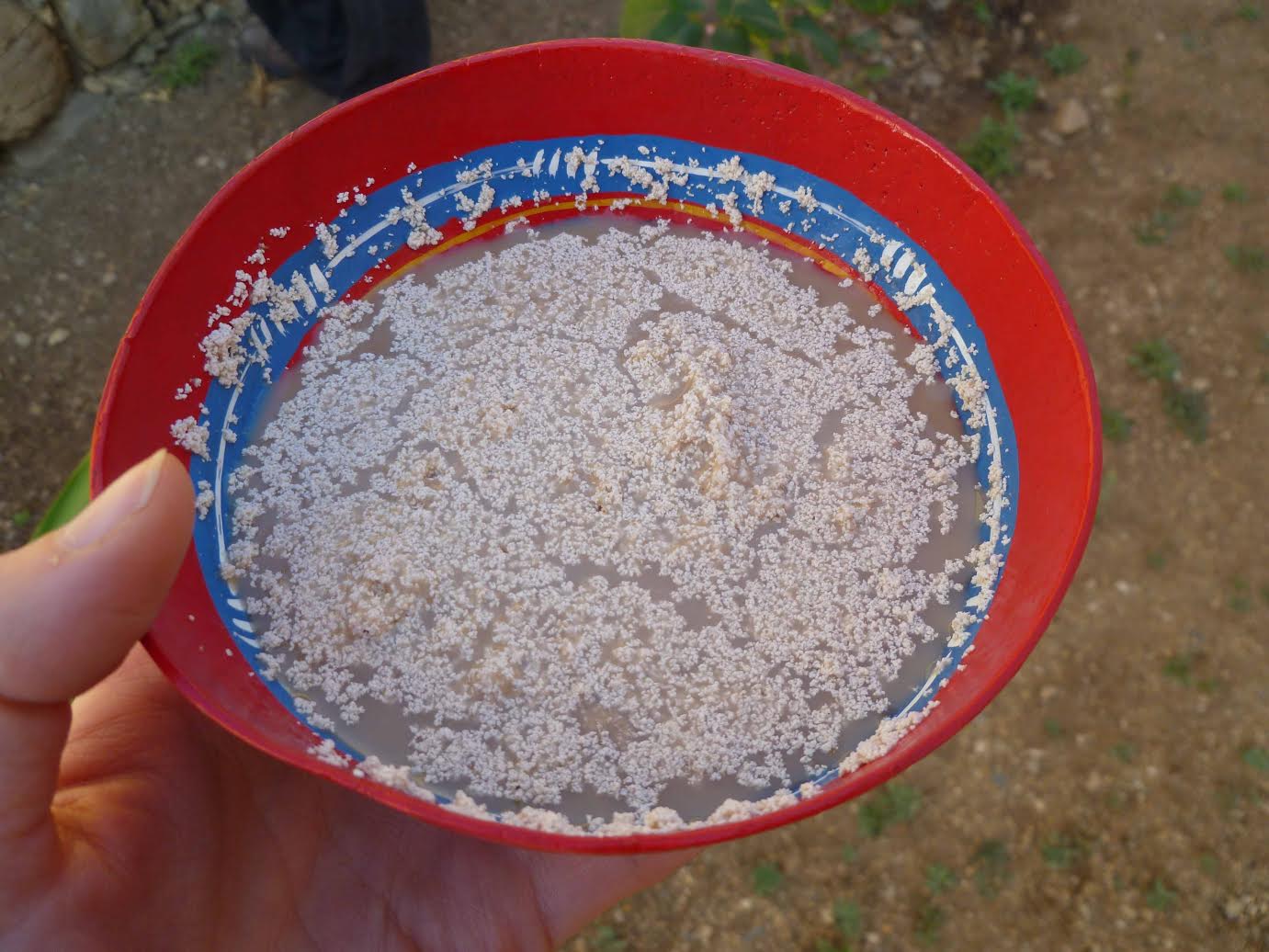
Tejate – A typical beverage from Oaxaca, made with maize flour, fermented cacao beans, mamey fruit pits and cacao flower. The ingredients are ground into a paste then hand-mixed with water until the flor de cacao rises to the top to form a pasty foam. The drink is served cold and can be sweetened with sugar.
Tlacoyo – Also known as tlatoyo. Corn dough formed into a thick oblong and filled with mashed red beans, fava beans, cheese or other ingredients. It can be toasted on a comal or fried, and eaten plain or with different kinds of salsa. Favored among farmworkers as lunch fare.
Maize Anatomy
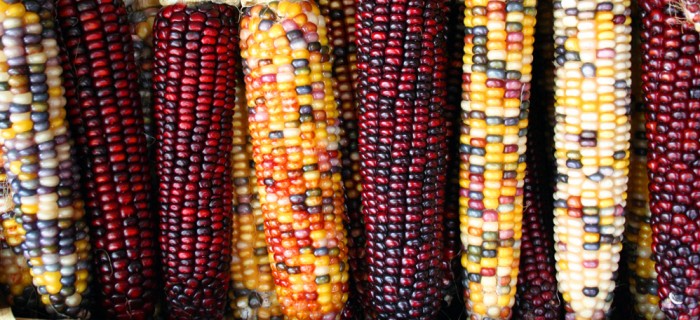
Jilote – An unripe cob, at the stage when grains have not yet been formed.
Caña – The dried stalk of the corn plant. Due to their light weight, they are commonly used to make sculptures and religious items that are carried in processions.
Olote – The cob to which corn kernels are attached, which is often used as cattle feed once stripped of the corn.
Totomoxtle – Cornhusks or leaves around the corncob, used as wrapping for tamales. They can also be used to smoke tobacco, and in certain regions, to make dolls, flowers, and other ephemeral pieces of folk art.
Tools of the Trade

“metate”
Coa – A farm implement resembling a hoe that is used to dig holes in the soil when planting corn by hand.
Chiquihuite – A basket used to keep tortillas hot.
Cuartillo – A measure that is still used today in some areas indicating the amount of corn needed to feed a family for one day.
Metate – A flat volcanic stone used to grind corn or cacao beans by hand. According to ancient Mexican lore, licking a metate would cause your teeth to fall out.
Source: Richard Moszka, “Glossary,” in Mitos del Maíz (Mexico: Artes de Mexico, 2006), 78–80.
--> // // Removidas / comentadas de forma segura. Se precisarem no futuro, reimplementar sem misturar HTML comment com PHP. ?> Help Food First to continue growing an informed, transformative, and flourishing food movement.