
Piedmont Farmers Preserving Italian Food Culture
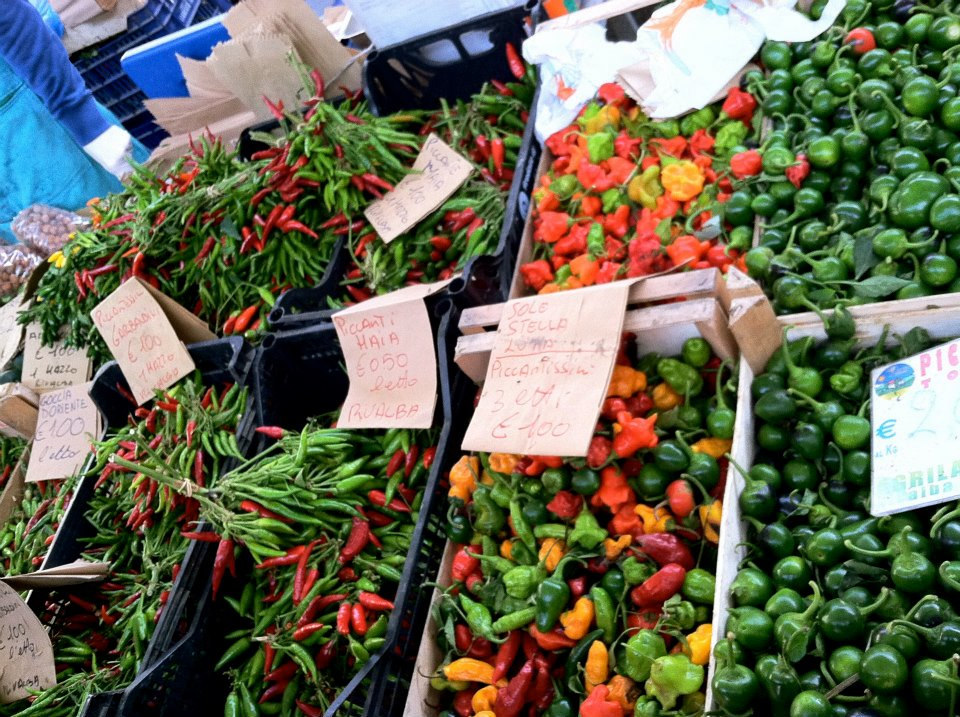 Although “Italian” cuisine has become world renowned, Italy’s food culture is strongly based on regional products and traditions. Piedmont is one of the most geographically diverse regions of Italy and thanks to its various micro-climates its regional cuisine offers a large variety of products and dishes. Many of these dishes are based on traditional peasant activities, such as rice production, raising cattle, making cheese and salami, producing wine, and cultivating various fruits and vegetables. Piedmont’s peasant-based food culture, however, has been threatened by EU policies favoring trade and industrial production. In the face of these threats, producers in the region are organizing to strengthen their communities and promote food sovereignty.
Piedmont cuisine is tightly linked to the traditions of farmers and peasants and their use of local products. They place a high value on producing fresh, quality products that make Piedmont cuisine genuine and traditional. Unfortunately, today the small farmer is struggling to stay alive in the globalized food system. According to the Italian National Institute of Statistics 2007 survey, there are 75,330 farms with 70 per cent of them being less than 10 hectares.[i] Small farmers are struggling to survive and many of them participate in small co-operatives, such as the Valli Unite, with 25 members who work together on preserving crop varieties, use traditional farming methods, and produce organic and GMO-free foodstuffs in a sustainable way.[ii] On a larger scale there is Coldiretti Piedmont, one of the largest social organizations in the region with 198,287 members. This organization tries to promote and enhance the value of agriculture in rural areas, and is an economic, social and environmental resource to help increase development and income opportunities for agricultural enterprises.[iii]
This is the time when farmers are coming together and uniting with other organizations and networks in their struggle for food sovereignty.
Local farmers are threatened by low-cost food imports that are jeopardizing the domestic food market. These cheap imports not only out-compete small farmers, they also bring lower quality products into the country. One of the industries in Piedmont that is being affected by EU’s free trade policies is the rice sector. While Italy is the largest rice producer in the European Union, it is also the 6th largest importer in the EU. Rice farmers are currently threatened by cheap imports from Asia.[iv] According to Fabrizio Rizotti, a small rice producer, rice prices are falling. Last year, rice prices were around 40-50 Euros per 100 kilograms and this year the price has fallen to 28 Euros.[v] Smaller rice producers are going out of business and there is currently an increasing number of larger rice farms.
 Family farmers throughout Europe have been struggling since the passage of the Common Agricultural Policy (CAP) by the European Commission in the 1960s. The CAP sought to “specialize” agriculture on ever-larger industrial farms in order to increase exports of key commodity crops. Small farms are struggling because most of the CAP subsidies tend to go towards the large-scale, industrial farms. They also have to comply with national hygienic regulations that are usually created for large companies. According to Alessandro Poretti, President of the Italian Association for Organic Agriculture Piedmont, these policies do not always take into consideration the small farm and artisanal production methods but are designed to benefit big companies.[vi] There is also a growing competition for fertile land. Smaller farms, that are not profitable, are tempted to sell their land to larger farms or developers.
Another industry under pressure is dairy production. Piedmont has 176,766 dairy cows and is one of the four regions that produce 80% of Italy’s milk.[vii] Small dairy farms have suffered since milk prices have lowered and production costs continue to rise. While the CAP was created to help maintain commodity price levels within the EU with agricultural subsidies, prices are dropping so low that CAP subsidies cannot cover the farmers’ losses. The EU has controlled milk production and prices with a quota system. It is a system that helps keep less competitive, smaller producers from going under, but the CAP is aiming to phase out these quotas by 2015.[viii]
In the face of these difficulties, regional organizations are setting out to promote food sovereignty and recognize peasant agricultural traditions in the region. The Rural Italian Association and the Italian Association for Organic Agriculture have aligned themselves with the European Coordination Via Campesina network and the fight to support small family farmers, offer training and assistance in organic food production and work on shortening the distribution chain from farmer to consumer. Piedmont is also home to the international organization Slow Food which aims at safeguarding small, local farmers, biodiversity and producing quality food in a sustainable way.
Even with all the current agricultural difficulties, the Piemontese farmer is still fighting to survive and preserve the traditions of his land. This is the time when farmers are coming together and uniting with other organizations and networks in their struggle for food sovereignty. They have been working this land for centuries and they are coming together to defend their history, tradition and food culture.
Stay in the loop with Food First!
Get our independent analysis, research, and other publications you care about to your inbox for free!
Sign up today!References:
[i] The Italian National Institute of Statistics <http://dati.istat.it/?lang=en> 6 October 2011.
[ii] Cooperativa Valli Unite <http://www.valliunite.com/EN_coop.php> 6 October 2011.
[iii] Coldiretti Piemonte < http://www.piemonte.coldiretti.it /default.aspx> 04 October 2011.
[iv] Center for the Promotion of Imports from developing countries. “CBI: Market Survey- The rice and pulses market in Italy” March 2010 <http://www.cbi.eu/marketinfo/cbi/docs/the_rice_and_pulses_market_in_italy> 28 September 2011.
[v] Rizzotti, Fabrizio. Interview. 24 September 2011.
[vi] Poretti, Alessandro. Interview. 05 October 2011.
[vii] Italian Animal Breeders Association <www.aia.it> 28 September 2011.
[viii] European Commision “Evolution of the market situation and the consequent conditions for smoothly phasing out the milk quota system” 12 August 2010 <http://ec.europa.eu/agriculture/milk/quota-report/com-2010-727_en.pdf> 28 September 2011.
--> // // Removidas / comentadas de forma segura. Se precisarem no futuro, reimplementar sem misturar HTML comment com PHP. ?> Help Food First to continue growing an informed, transformative, and flourishing food movement.