PROINPA: Conserving diversity for food sovereignty in Bolivia
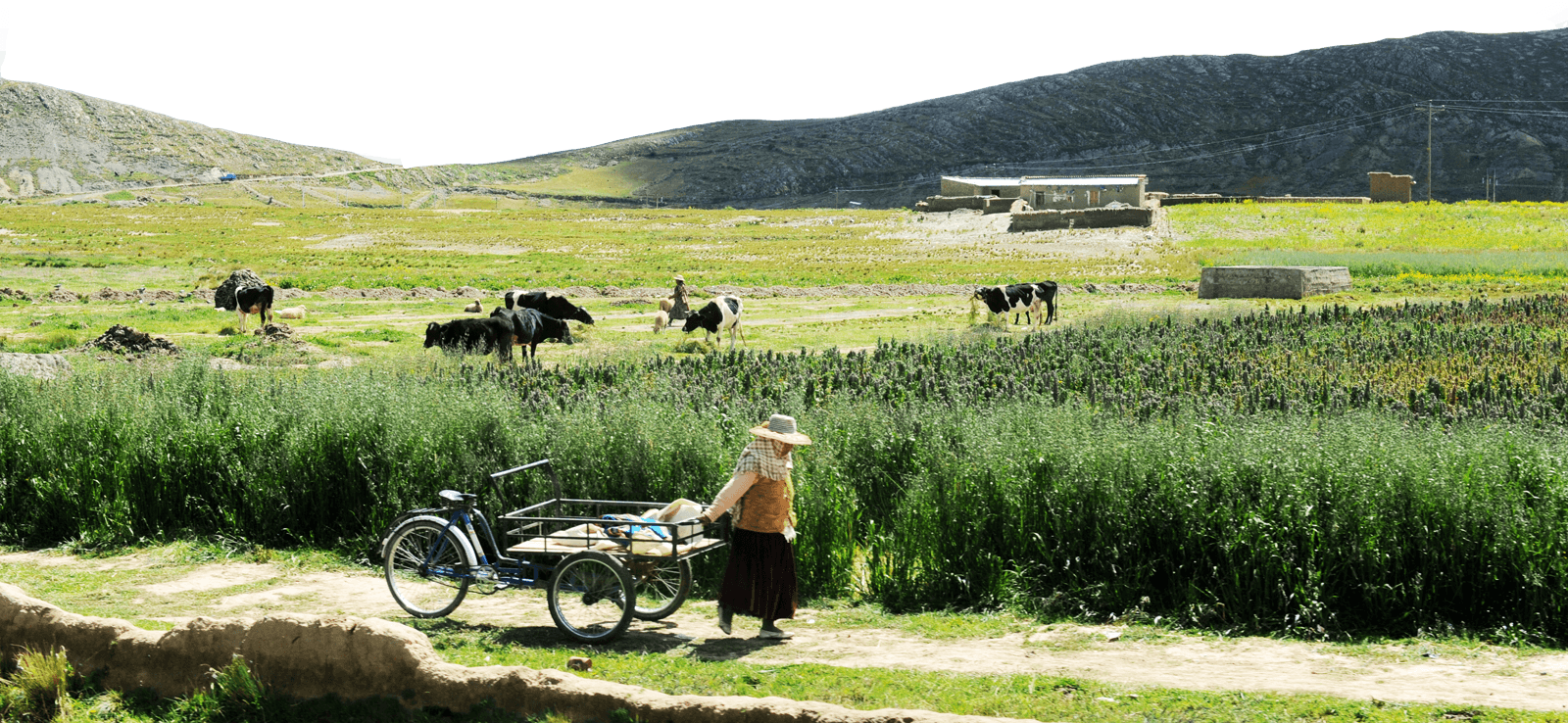
As one of the fifteen most biodiverse countries in the world, Bolivia holds great significance for the future of global sustainability and food production. However, the expansion of industrial monoculture, extractive industries, climate change, and rural-to-urban migration are a few of the many threats to this rich diversity, which is intimately linked to peasant livelihoods. The Bolivian NGO PROINPA assists hundreds of rural communities to conserve and manage diversity in and around farmers’ fields or in situ.
This local, traditional knowledge combined with genetic diversity of native crops, called ‘landraces’, is increasingly important for adapting food production to global climate change.
PROINPA works with over 400 communities in seven of Bolivia’s nine departments promoting sustainable and economically viable smallholder agriculture. With numerous labs and greenhouse facilities and a diverse staff from various disciplines, PROINPA has been operating for over a decade, both providing long-term assistance and organizing events like agrobiodiversity contests to encourage farmers to preserve and showcase their crop diversity. At the seventh annual Agrobiodiversity Contest in the highland municipality of Moco Moco in June 2010, the first place winner presented over 500 varieties of potatoes from his own fields. This is in a region where farmers hold an average of 0.6 to 3 hectares of land, fragmented into as many as twenty non-contiguous plots[i].
Indeed, farmers plant different varieties based on the soil conditions and ecological niche of different plots. With the immense variability of the Andean environment, a potato variety that thrives in one spot might do poorly just 50 meters away. This local, traditional knowledge combined with genetic diversity of native crops, called ‘landraces’, is increasingly important for adapting food production to global climate change. According to a recent FAO report on the use of plant genetic resources for food security, there is a global demand for genetic material to adapt to changing climate conditions. Most of these resources are found exclusively in the centers of origin of crops, such as potato varieties in the central Andes. These crops, and their equally important wild relatives, are poorly conserved in gene banks (ex situ), so small farmers must be supported to conserve them in situ[ii].
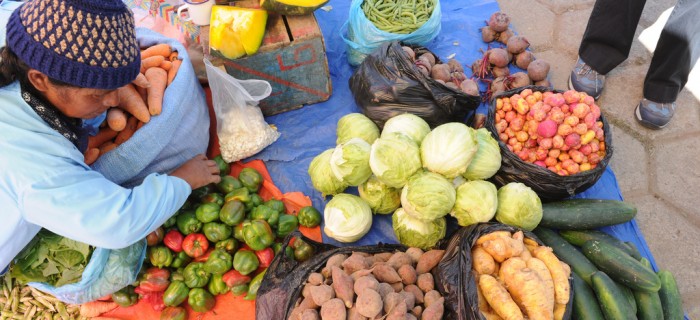
 Part of PROINPA’s work is to diversify local markets and educate consumers about the great variety of food crops that are maintained by Bolivian farmers, primarily for their own consumption. Astonishingly, of the tremendous diversity of potatoes grown in Bolivia, only eight varieties are sold in the La Paz markets. Part of the challenge lies in the lack of knowledge of how to prepare these products. Margarita Quispe Mamani, a farmer in the highland village of Cariquina Grande, laughs when people ask her if all potatoes can be cooked the same way: “No pues! Each variety has its own special preparation method.” She presented some of her signature dishes, showcasing the crops of her community, at a PROINPA-sponsored Agrobiodiveristy Contest.
One of the greatest threats to agro-biodiversity is the promotion of ‘modern’ seed varieties and export-oriented monocropping. The FAO estimates that since the beginning of the twentieth century about 75% of the word’s genetic diversity of agricultural crops has been lost due to the push to “modernize” agriculture[iii]. In Bolivia, the expansion of export-oriented monocultures—from soybeans to quinoa to coca—pose a threat to the environment and biodiversity. A recent New York Times article described how the expansion of quinoa in the Altiplano, driven by niche health food markets in Northern countries, was making the highly nutritious food unaffordable for most Bolivians. Another impact of the quinoa export boom has been the expansion of a few commercial varieties leading to genetic erosion in the Southern Altiplano region. In response to this problem PROINPA is working to strengthen the local production of multiple quinoa varieties for home consumption and sale in local markets. The documentation and preservation of traditional cultivation practices and seed varieties are crucial in protecting the region’s genetic diversity against the whims of the global market.
[i] Vacher et al. “Influencia del Lago en la Agricultura Litoral” in: El Lago Titicaca: Síntesis del conocimiento limnológico actual, 1991.
Stay in the loop with Food First!
Get our independent analysis, research, and other publications you care about to your inbox for free!
Sign up today! Help Food First to continue growing an informed, transformative, and flourishing food movement.